


- Featured
B2B Edition
Advanced B2B features for enterprise plans.Catalyst
NewCreate stunning, high-performing storefronts that captivate and convert.Feedonomics
Omnichannel feed and data transformation.Multi-Storefront
Manage multiple unique stores from one account.International
Grow your brand across the globe.
- Launch Services
Overview
Chart your path to success with specialised services.Implementation Project Management
Experts to ensure you launch on time and under budget.Solution Architecture
Seasoned advisors to help you best design your store.Data Migration & Optimisation
Expertise on a clean and clear path to migrating your data.Enterprise Launch Package
Personal training on how to set up and launch your BigCommerce Store.
Professional Services Blog Series
Get to know our teams and how they support your success in this Q&A series.

The Global B2B Buyer Behavior Report
This in-depth report provides actionable strategies to help you sell more online.
Explore the
BigCommerce platform
Get a demo of our platform to see if we’re the right fit for your business.
Not ready for a demo? Start a free trial
Finding Dropshipping Companies & Suppliers for Your Ecommerce Store in 2026

Written by
Mandy Spivey22/01/2026
Key highlights:
Dropshipping as a business model has emerged as a cost-effective solution to traditional retail models, eliminating the need to stock physical inventory while boosting profit margins
Partnering with the right suppliers is crucial when sourcing high-quality products within a given niche
AI tools, automation, and third-party integrations are quickly becoming the standard, accelerating the search and purchase process
Conducting thorough research, both for potential products and dropshipping companies, is the first step to start dropshipping
Dropshipping has gained popularity during the last decade, and for good reason.
This type of business model allows businesses to do more with less overhead and stock on hand, allowing you to sell products online without ever holding inventory.
Instead, when a customer places an order, the retailer purchases the item from a third-party supplier — such as a manufacturer or wholesaler — who ships it directly to the customer.
This model removes the need for warehousing and inventory management, helping businesses lower startup costs, reduce overhead, and focus on marketing, sales, and customer experience.
When considering launching your dropshipping ecommerce business, it’s important to do research on dropshipping suppliers well before ever placing your first purchase order.
Finding the right high-quality products that fit within your budget and niche are crucial, but so is your partnership with your supplier.
From US suppliers to companies on the other side of the world, choosing the right dropshipping companies to source from has a huge impact on your business.
Keep reading for our list of tips and suppliers to get you started.
Step-by-step guide to finding dropshipping suppliers
Finding reliable dropshipping suppliers requires a structured approach that balances product quality, pricing, and operational fit. Successful ecommerce brands prioritise supplier research early, using a mix of direct outreach, online research, and competitive analysis to reduce risk and ensure long-term scalability.
As your supplier list grows, managing products, orders, and inventory across multiple partners becomes more complex. Ecommerce platforms like BigCommerce are often used at this stage to centralise catalogue management and integrate with dropshipping and order management tools as operations scale.
For example, popular fashion label Badgley Mischka uses dropshipping as part of its ecommerce business model. By tapping into the BigCommerce’s ability to integrate with partners for order management, page building, and feed management, the brand increased revenue by 61% and average order value by 31%.
Reach out to the manufacturer.
Sometimes finding the best suppliers begins with picking up the phone or sending an email.
Contacting manufacturers directly is often the fastest way to identify legitimate wholesalers. If you already know the product categories you want to dropship, manufacturers can confirm whether they support dropshipping and connect you with approved distributors that specialise in your niche.
Research extensively online.
Online research remains one of the most effective ways to evaluate dropshipping suppliers.
While search engines can help you identify potential partners, supplier websites may be outdated or minimally designed, since many wholesalers invest less in marketing.
Use keyword modifiers such as “bulk,” “distributor,” “reseller,” and “supplier,” and prioritise suppliers with clear ordering workflows and transparent purchasing processes.
Consider your niche. High-demand products may be available for a premium price. In-demand products may be a hassle to hunt down and buy. The best dropshipping products align with your brand, serve a need in your target market, and help you grow your business.
Go straight to the competition.
Analysing competitors can reveal valuable insights into supplier reliability.
Ordering from a competitor that uses a dropshipping model allows you to inspect packaging, shipping speed, and return addresses, which can help identify potential suppliers worth researching further.
Visit a trade show.
Gather information about multiple dropshipping suppliers all in one place by visiting a trade show in your product category.
Although there are usually some upfront costs associated with getting into a trade show (admission fees, travel, etc.), the connections you can create are well worth it, allowing you to conduct real-time product research, build out your contact list, and narrow down your search for suppliers.
Speak to businesses with vetted dropshipping partnerships.
If you know of any businesses that have done business with dropshipping suppliers, see if they’d be willing to share their expertise with you.
You may have a friend who runs a print on demand business who has contacts that you could use. Or perhaps someone you know has experience with sourcing trending products for their business. Many times if a business owner isn’t a direct competitor, they’re more willing to share their learnings.
There's a lot to love ❤️
Watch a demo to see the BigCommerce platform in action.
Best dropshipping suppliers
If you want to sell products without managing inventory, partnering with established dropshipping suppliers can simplify fulfilment and scale operations.
The following companies offer a range of products, integrations, and automation tools to support different ecommerce business models.
1. Spocket.
Spocket is a dropshipping marketplace that enables retailers to start and scale their online stores. Spocket connects retailers to thousands of suppliers across the USA and Europe.
2. AliExpress Dropshipping.
AliExpress is a wholesale and dropshipping platform that connects dropshippers to suppliers and products, including consumer electronics and apparel.
3. Modalyst.
Modalyst is here to help brands expand their online business with the power of dropshipping services, with high-quality products that ship directly from vendors to customers.
4. SaleHoo.
SaleHoo is a wholesale supplier directory that connects dropshippers to suppliers, including suppliers in a variety of different niches. It is a well-known dropshipping marketplace along with others such as Alibaba.
5. Doba.
Doba is an AI-powered dropshipping marketplace that compiles manufacturers and suppliers into one place. With Doba, you can search through wholesale products in your industry and consolidate them into custom lists.
6. Wholesale2B.
Wholesale2B is a supplier integration system that allows you to choose more than one million products and sell them on BigCommerce, Amazon, and eBay.
7. Worldwide Brands.
Worldwide Brands is a comprehensive directory of dropshippers and bulk distributors. They continually update their list with new suppliers and certify that each is reputable and reliable.
8. Sunrise Wholesale.
From home decor to jewelry and more, Sunrise Wholesale is a general wholesaler with more than 15,000 products, and easily integrates with BigCommerce.
9. MegaGoods.
MegaGoods is a distributor and dropshipper for wholesale products such as clocks, kitchen items, televisions, and more.
10. Inventory Source.
Inventory Source is a dropship network that provides access to more than 180 suppliers and allows you to sync your inventory and auto-upload product data.
11. Syncee.
Save time and streamline your workflows. Syncee was made to help online ecommerce stores pick products individually or in bulk from dropshipping or wholesale suppliers.
12. DropCommerce.
DropCommerce showcases hand-picked products to dropship, and even integrates with the top ecommerce platforms including BigCommerce.
13. Wholesale Central.
Get access to comprehensive wholesale and dropshipping suppliers when you log on and shop at Wholesale Central.
14. DSers.
DSers helps you find affordable suppliers, import a wide variety of products from various sources, partner with better and more reliable suppliers, all while automating time-consuming tasks.
15. Trendsi.
Get your clothing or retail dropshipping business started with no upfront fees and trusted quality assurance.
Whether you are looking for pet supplies on Wholesale Central, skincare and beauty products or other various product categories on National Dropshippers, the list of dropshipping stores goes on and on.
However, not all companies are legitimate.
How to spot a fake dropshipping supplier
Not all dropshipping suppliers operate legitimately.
Because most supplier research happens online, it’s essential to recognise common warning signs before committing to a partnership.
Identifying red flags early helps protect your margins, customer experience, and brand reputation.
Watch out for dropship supplier subscription fees.
Although many supplier directories and apps require you to pay a subscription fee in order to access vendor lists, individual dropshipping suppliers should not charge you ongoing fees in order to do business with them.
Small order processing fees are different, but these costs shouldn’t break the bank.
Wholesale pricing can be a red flag.
Do not fall for the “too good to be true” suppliers.
Vendors with unrealistically low wholesale prices or free dropshipping promises are usually red flags for ecommerce businesses looking to build long-lasting relationships with their suppliers.
Look into minimum order quantities (MOQ).
Because dropshipping is designed to reduce the need to hold inventory, watch for suppliers with strict minimum order quantities (MOQs).
If a supplier requires MOQs, ask whether you can negotiate a prepaid credit toward future orders instead of buying large quantities upfront.
A support team in case something goes wrong.
Although the purpose of running a dropshipping business is to reduce costs, you don’t want to partner with a dropshipping supplier that cuts all the corners.
As you weigh the pros and cons of working together, don’t forget to check to see if they have any sort of support team or customer satisfaction team in case things go wrong.
Issues like late shipments, lost tracking, a site that’s not user-friendly, and incomplete communication can all affect your business, which is why it’s important to make sure you’re not on your own if something goes wrong.
Zero transaction fees? Say no more.
We never charge additional transaction fees for any payment provider. Guaranteed.
The final word
It may take time, research, and the right tools to help you find the winning products for your business. But with the right dropshipping strategy, it’s possible to scale to the next level without holding all of the inventory to get there.
Understanding what to look for (and what to watch out for) is key.
Want to learn more? Stay up to date with the right approaches to dropshipping on our blog.
FAQs about dropshipping suppliers
What is dropshipping?
Dropshipping is an order fulfilment method that allows your business to partner with a supplier to display and sell their products in your online store. In other words, you can sell their goods and it does not require your business to keep the product in stock.
When you sell an item, the dropshipping business (the supplier) will send that purchased item straight to the customer.
The product itself never passes through your hands.
This online business model sounds too good to be true, right? Not exactly.
With the right approach, dropshipping can be a successful fulfilment method, including with trending, worldwide brand name items. That means taking the time to conduct market research and finding the right suppliers.
What is the dropshipping supply chain?
The dropshipping supply chain typically involves several parties.
A manufacturer produces the product, then one or more wholesalers or distributors stock it and make it available to retailers.
When a customer buys from your store, you pass the order to the supplier, who ships the product to the customer. Shipping times vary by supplier and location, so set expectations clearly.
Are there free dropshippers?
Yes. There are several free dropshippers in both general and niche categories.
Although some larger dropshippers charge yearly or monthly fees, most only ask that you pay the cost of the products you are shipping to the customer.
Some may charge additional shipping costs or fees.
Is dropshipping legal?
Yes, it is legal. It is also important to familiarise yourself with counterfeit and trademark regulations in your region to ensure that you and your dropshipping supplier avoid crossing any lines, including with various branded products.
Is dropshipping profitable?
Yes, dropshipping can be profitable to ecommerce businesses and entrepreneurs looking to launch their brand.
Dropshipping is a low-risk business model that allows you to sell products to your customers without incurring huge running costs like a wholesaler would have. Because of the low-cost, it could be easier to become profitable with dropshipping faster than other business models.
Can I pay dropshipping companies with a credit card?
Yes. In fact, suppliers might even require you to pay by credit card at first.
Can I dropship on Amazon?
Yes, you can dropship on Amazon. However, your business must follow Amazon’s dropshipping policy, which includes: being the seller of record for your products, identifying yourself as the seller of your products on all packing slips, invoices and external packing. You must also be responsible for accepting and processing customer returns of your products.
An alternative to using a dropshipping supplier is the Fulfilment by Amazon (FBA) programme.
Can I dropship on eBay?
Yes, you can also dropship on eBay. However, it is a very competitive space and it’s hard to make a big profit.
How do dropship suppliers handle returns?
To return an item, you will often need to get a return merchandise authorisation (RMA) from your supplier, which aids the process of your customer shipping the product back to their address.
Make sure you also have all other item information on hand to help the customer support process go as smoothly as possible.
Once the item is shipped and received, the supplier will refund you and you refund the customer.
Beware of extra fees from your dropshipper, including a restocking fee.
Any tips for automating dropshipping?
Looking to automate your dropshipping? That’s definitely possible.
Take Spark Shipping, for example. They specialise in automating the connection between your ecommerce platform (such as BigCommerce) and dropshippers.
If the dropshipper supports it, Spark Shipping automates inventory quantities, orders, and tracking data between BigCommerce and the dropshipper.
What apps or tools help automate inventory syncing across dropshipping platforms?
To automate inventory syncing across dropshipping platforms, use specialised apps and tools like Doba, DSers, Spocket, and Syncee that connect to platforms (BigCommerce, Amazon, etc.) to update stock levels, prices, and orders automatically, preventing overselling while managing multiple channels.
How can I use AI tools to analyse trending dropshipping products?
AI tools can help ecommerce businesses analyse trending dropshipping products by leveraging their ability to process vast amounts of data on market demand, social media engagement, and competitor sales, providing data-driven insights to help you identify profitable opportunities and predict future trends before they happen.
What legal agreements should I have in place with my dropshipping suppliers?
In many cases, you’ll need a formal Supplier Agreement with key clauses (including pricing, liability, Intellectual Property (IP), confidentiality, returns, and compliance).
Depending on your formal agreement with your supplier, you may have more robust customer-facing policies (such as Terms & Conditions, Privacy Policy, Refund Policy) to define responsibilities, protect your business, and stay in compliance with laws like GDPR, consumer protection, and tax regulations.
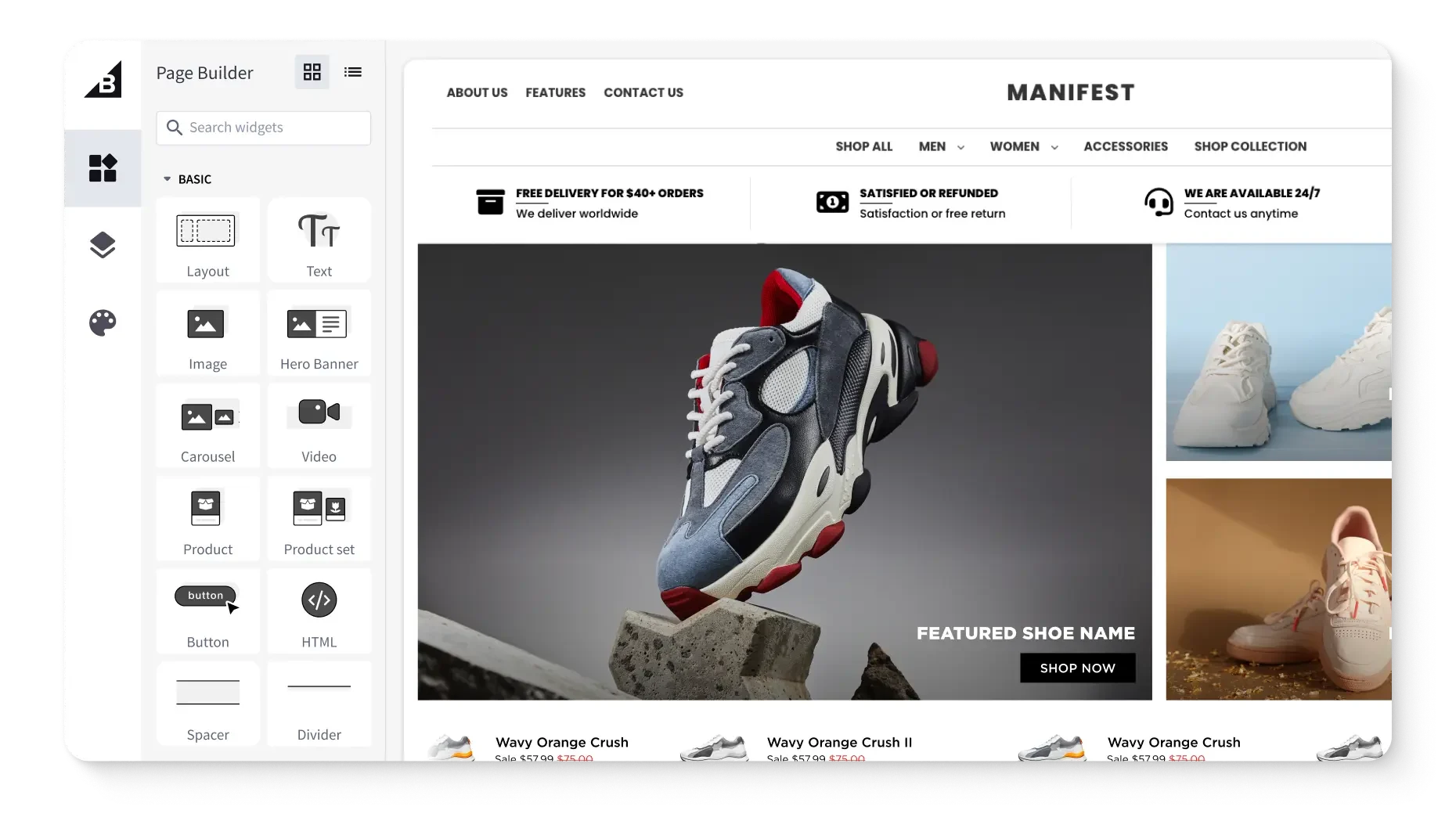
Get a free 15-day trial of BigCommerce.
No credit cards. No commitment. Explore at your own pace.