





Written by
Mandy Spivey27/04/2026
Key highlights:
Direct selling is a business model where products are sold directly to consumers, often through independent sellers rather than traditional retail channels
Modern direct-selling ecommerce blends relationship-driven selling with scalable digital infrastructure
Social media, mobile commerce, and personalised storefronts have transformed how direct sellers reach customers
Ecommerce platforms like BigCommerce enable brands to scale direct selling with flexibility, automation, and global reach
The future of direct selling is hybrid, combining personal connections with always-on digital commerce
Direct selling isn’t new.
But how it works today looks very different.
At its core, direct selling is a model where businesses sell products straight to customers outside of traditional retail stores. Instead of relying on shelves or marketplaces, brands empower individuals to sell on their behalf.
Those individuals, often independent sellers, consultants, or creators, build relationships. They recommend products. And they drive sales through trust, not just transactions.
What’s changed is the infrastructure behind it.
Today, direct-selling ecommerce combines those personal relationships with the scale of digital commerce. Social platforms, mobile storefronts, and integrated ecommerce systems allow sellers to reach customers anytime, anywhere — without being limited by geography.
This shift matters for growing brands.
It opens the door to:
Expanding beyond physical networks
Creating personalised buying experiences at scale
Blending social commerce with traditional ecommerce
Platforms like BigCommerce support this evolution with open SaaS flexibility, multi-storefront capabilities, and tools that help businesses manage distributed sales networks without sacrificing control.
The result?
A more scalable, data-driven approach to direct selling that keeps relationships at the centre while unlocking modern ecommerce growth.
What is direct selling?
Direct selling is a business model where companies sell products directly to consumers, without relying on the traditional retail environment or third-party marketplaces.
And this model means big business. In fact, according to the Direct Selling Association, direct selling in the United States amounted to $34.7 billion in retail sales in 2024, including 34.3 million customers and 5.4 million direct sellers.
Behind the numbers, this type of business model works by putting brands in touch with independent sellers, who then promote and sell products through personal networks, events, or digital channels.
These sellers, in essence, act as an extension of the brand.
They build relationships. They offer recommendations. They create more personalised buying experiences.
Whether you’re a direct-to-consumer brand selling skincare products or supplements, or a wholesale business selling to businesses in bulk, there are some important similarities that unite direct sellers.
Key characteristics of direct selling.
Direct selling stands apart from traditional ecommerce and retail in a few important ways:
Relationship-driven sales.
Purchasing decisions are often influenced by trust and personal connections rather than just product listings or ads.
Personalised customer experiences.
Sellers tailor recommendations, content, and offers to individual customers, often based on direct interactions.
Decentralised salesforce.
Instead of a centralised sales team, brands rely on a distributed network of independent sellers operating across different channels and regions.
How direct selling has evolved in the digital era.
Direct selling used to happen face-to-face. Think about Tupperware parties of previous eras.
Now, it happens everywhere.
The rise of digital commerce has transformed how entrepreneurs connect with customers. Social media, messaging apps, and ecommerce platforms have replaced living rooms and in-person events.
Today’s direct-selling ecommerce model is:
Digital-first: Powered by online storefronts and mobile experiences
Always-on: Not limited by time or location
Scalable: Capable of reaching global audiences
This evolution has turned direct selling into a hybrid commerce model — blending human connection with the efficiency and reach of modern ecommerce platforms like BigCommerce.
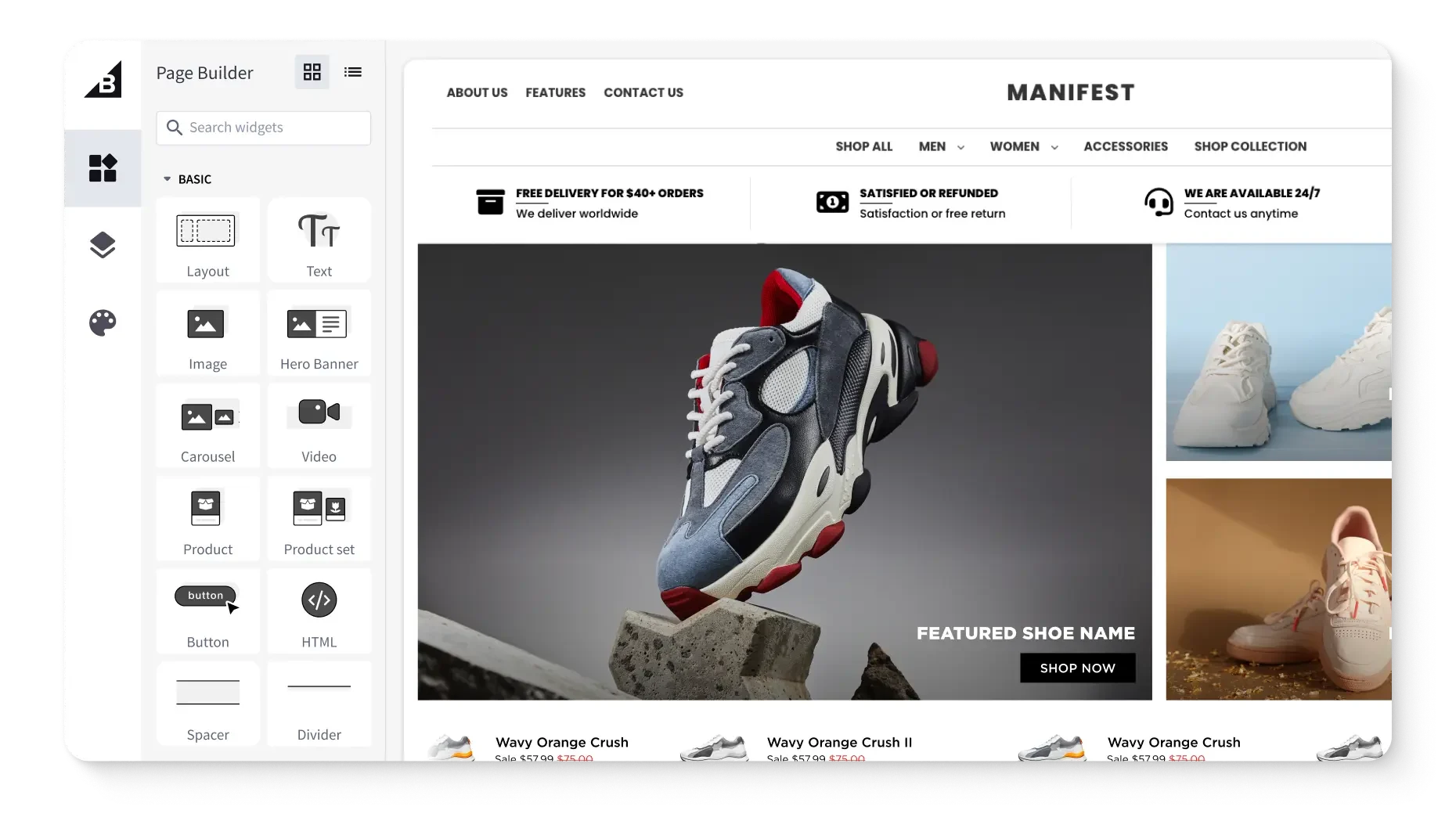
Get a free 15-day trial of BigCommerce.
No credit cards. No commitment. Explore at your own pace.
How direct selling has evolved in the digital era
Direct selling started offline.
Think home parties, in-person demos, and door-to-door sales. That model worked, but it had limits.
Traditional direct selling model.
Early direct selling relied heavily on physical interactions. Sales strategy was different from person to person.
A salesperson would:
Host events or product demonstrations
Meet customers face-to-face
Sell within their immediate geographic network
This approach built strong relationships. Things like customer referrals helped build trust with those outside of your network.
But scaling was difficult. Reach was limited, and sales only happened when the seller was actively engaging. Wholesalers certainly had their work cut out for them. Then everything changed when life went digital.
The rise of digital channels.
Social and mobile took over.
Platforms like Instagram, TikTok, and Facebook groups changed how sellers connect with customers. Messaging apps and live selling added real-time interaction — without needing to be in the same room.
Now, direct sellers can:
Promote products through short-form content and livestreams
Build communities around their brand or niche
Sell directly through social platforms and messaging
The relationship-driven nature of direct selling didn’t disappear; it simply moved online.
Ecommerce as an enabler of scale.
This is where direct-selling ecommerce takes off.
Modern ecommerce infrastructure allows brands to support thousands of independent sellers at once, without losing control of operations.
With the right platform, businesses can offer:
Personalised online storefronts for each seller
Mobile-first purchasing experiences for on-the-go buyers
Global reach with localised shopping experiences
BigCommerce, for example, enables this with Multi-Storefront capabilities, flexible APIs, and open SaaS architecture — giving brands the control they need while empowering sellers to operate independently.
The shift toward hybrid commerce.
Today, direct selling is no longer purely offline or online.
It’s both.
This hybrid model blends:
Relationship-driven selling
Scalable ecommerce infrastructure
Sellers build trust through content, conversations, and community.
Ecommerce handles transactions, fulfilment, and scale.
The result is a more resilient, flexible approach to selling, one that meets customers’ needs with the right products, wherever they are.
Zero payment fees for embedded providers? Say no more.
We never charge additional fees for businesses that use any of our 20+ embedded payment providers.
Using ecommerce for direct selling
Direct selling has gone digital, but it doesn’t work without the right ecommerce foundation.
To scale a distributed network of sellers, brands need more than entrepreneurship, social media accounts, and payment links. They need infrastructure that connects sellers, customers, and operations in one place.
The integration of direct selling with ecommerce infrastructure.
Modern direct-selling ecommerce combines relationship-driven selling with centralised systems.
Here’s how it works:
Independent sellers use digital storefronts: Each seller gets a personalised storefront or microsite to promote and sell products
Social platforms drive engagement: Sellers use social media, content, and messaging to connect with customers
Transactions happen online: Ecommerce platforms handle checkout, payments, and order processing
Backend systems stay centralised: Inventory, fulfilment, and customer data are managed in one unified system
The experience feels personal to the customer — but operationally, it’s highly structured and scalable.
How it works in practise.
A customer might discover a product through a creator’s TikTok.
They click a link to that seller’s personalised storefront.
They browse, purchase, and check out — all within a seamless ecommerce experience.
Behind the scenes, the brand manages:
Product catalogues and pricing
Inventory across regions
Order routing and fulfilment
Seller attribution and commissions
This balance is what makes direct-selling ecommerce effective.
Why it matters today.
Consumer behaviour has changed.
People expect:
Personalised recommendations
Fast, convenient online purchasing
Authentic engagement with brands and sellers
Direct selling, powered by ecommerce, delivers on all three.
It also helps businesses:
Scale beyond personal networks without losing the human touch
Support always-on selling across time zones and channels
Bridge social commerce and traditional ecommerce into one cohesive experience
BigCommerce supports this model with open SaaS flexibility, more built-in features, and robust APIs — making it easier to integrate social channels, power multiple storefronts, and manage complex seller ecosystems.
Direct selling is no longer limited by who you know.
With the right ecommerce platform, it’s defined by how far you can scale.
There's a lot to love ❤️
Watch a demo to see the BigCommerce platform in action.
Challenges of direct selling
Direct-selling ecommerce creates new opportunities.
But it also introduces complexity, especially as businesses scale.
Brands need to balance flexibility for sellers with control over operations, branding, and customer experience.
Scaling a distributed sales network.
Growth means more sellers. And more sellers mean more moving parts.
Brands often face challenges like:
Managing large numbers of independent sellers across regions
Ensuring consistent messaging and brand representation
Supporting onboarding, training, and performance tracking
Without the right systems in place, scaling can quickly become difficult to manage.
Technology and infrastructure complexity.
Direct selling isn’t just about enabling sellers; it’s ultimately about connecting systems.
Business owners and their organisations must coordinate:
Multiple storefronts or microsites
Inventory across channels and locations
Payments, taxes, and compliance requirements
Commission tracking and payouts
This level of complexity requires flexible, API-driven ecommerce infrastructure.
BigCommerce addresses this with open SaaS architecture, allowing brands to integrate best-in-class tools while maintaining a centralised system of record.
Reputation and trust considerations.
Direct-selling models, especially those associated with multi-level marketing, can face scepticism.
Customers expect transparency. That means brands need to clearly communicate:
Product value and pricing
Compensation structures for sellers
Their own business practises and compliance standards
Building trust is critical to long-term success.
Balancing personalisation with automation.
Personalisation drives direct sales, but scaling personalisation is challenging.
As seller networks grow, brands must find ways to:
Maintain authentic, one-to-one interactions
Enable sellers with content and insights
Automate processes without losing the human touch
This is where ecommerce platforms play a key role, providing data, automation, and tools that empower sellers while keeping experiences relevant and personal.
Direct selling works best when customer relationships and systems work together. Without the right foundation, growth can create friction instead of momentum.
⏰ Isn't about time that you evaluated your ecommerce platform?
Request a demo to see how the BigCommerce platform is different.
Key features of a successful direct selling strategy
Not all direct-selling ecommerce strategies scale effectively.
The difference comes down to infrastructure.
Brands that succeed build systems that empower sellers while keeping operations centralised and efficient.
Rep-enabled infrastructure.
Sellers need tools to succeed, and that starts with giving each seller their own space to sell.
Key capabilities include:
Personalised storefronts or microsites tailored to individual sellers
Commission tracking and attribution to ensure accurate payouts
Easy product sharing across channels
With BigCommerce Multi-Storefront, brands can create and manage multiple unique storefronts from a single backend — making it easier to support large seller networks at scale.
Social commerce integration.
Direct selling lives on social platforms. Your ecommerce experience should connect to where sellers already engage their audience.
That means:
Seamless product linking from social content
Integration with platforms like Instagram, TikTok, and Facebook
Support for content-driven commerce and live selling
BigCommerce’s open SaaS approach makes it easy to integrate with social tools and emerging channels, without being locked into a single ecosystem.
Mobile-first experience.
Direct sellers don’t sit behind desks. They sell on the go.
A mobile-first experience ensures:
Sellers can manage their storefronts from anywhere
Customers can browse and purchase on any device
Checkout is fast, simple, and optimised for conversion
This isn’t optional. In fact, it’s expected.
Unified backend systems.
An unfortunate reality for ecommerce brands is that complexity increases as you scale. But a unified backend keeps everything connected.
This includes:
Centralised inventory and order management
Integrated fulfilment and logistics workflows
Consistent pricing and product data across storefronts
BigCommerce helps simplify this with a single source of truth, reducing manual work for your team and minimising errors.
Data and personalisation capabilities.
Data powers better selling.
The right platform gives both brands and sellers access to insights that drive performance.
Some important capabilities to consider when picking a platform include:
Customer behaviour and purchase history
Personalised product recommendations
Targeted offers and promotions
With these insights, sellers can create more relevant, high-converting experiences, minus all the guesswork.
The future of direct selling
Direct selling is evolving fast, and ecommerce is at the centre of that transformation.
As technology advances and consumer expectations shift, the line between direct selling, social commerce, and traditional ecommerce continues to blur.
The rise of social and creator-led commerce.
Today’s direct sellers don’t always look like traditional reps.
They look like creators.
Influencers, content creators, and niche community leaders are becoming powerful sales drivers, using platforms like TikTok, Instagram, and YouTube to recommend products and build trust at scale.
This shift expands the definition of direct-selling ecommerce:
Sellers are also marketers and storytellers
Content becomes a primary sales channel
Communities drive conversion, not just transactions
Increased adoption of AI and automation.
Scaling personalisation used to be difficult. Now, it’s becoming expected.
AI shopping agents and automation are helping brands:
Deliver personalised product recommendations
Provide sellers with real-time insights and content suggestions
Automate repetitive tasks like inventory updates, order routing, and customer segmentation
This allows direct selling businesses to maintain a personal touch, even as they grow.
Convergence with traditional ecommerce.
Direct selling is no longer a separate channel; it’s part of a broader ecommerce ecosystem.
The most successful brands are blending:
Direct-to-consumer (DTC) ecommerce
Social commerce
Marketplace strategies
Direct selling networks
The result is a unified commerce approach, one where customers can discover and purchase products through multiple touchpoints, all powered by the same backend infrastructure.
BigCommerce supports this convergence with open SaaS flexibility, allowing brands to integrate channels, unify data, and scale without platform limitations.
Global expansion and localisation.
Digital infrastructure removes geographic barriers.
Direct-selling ecommerce now enables brands to:
Expand into new international markets
Localise storefronts, currencies, and languages
Support cross-border selling with ease
With capabilities like Multi-Storefront and flexible integrations, BigCommerce makes it easier to manage global operations while delivering localised customer experiences.
Multi-Storefront made possible by BigCommerce
In this digital era, the brands that are able to put their products in front of the most customers win. And that means expanding reach across borders. And that means creating multiple storefronts for shoppers in wide-ranging geographical areas.
Learn a little bit more about the brands who rely on BigCommerce to build multiple storefronts for customers across the globe.
Sportsshoes.com.
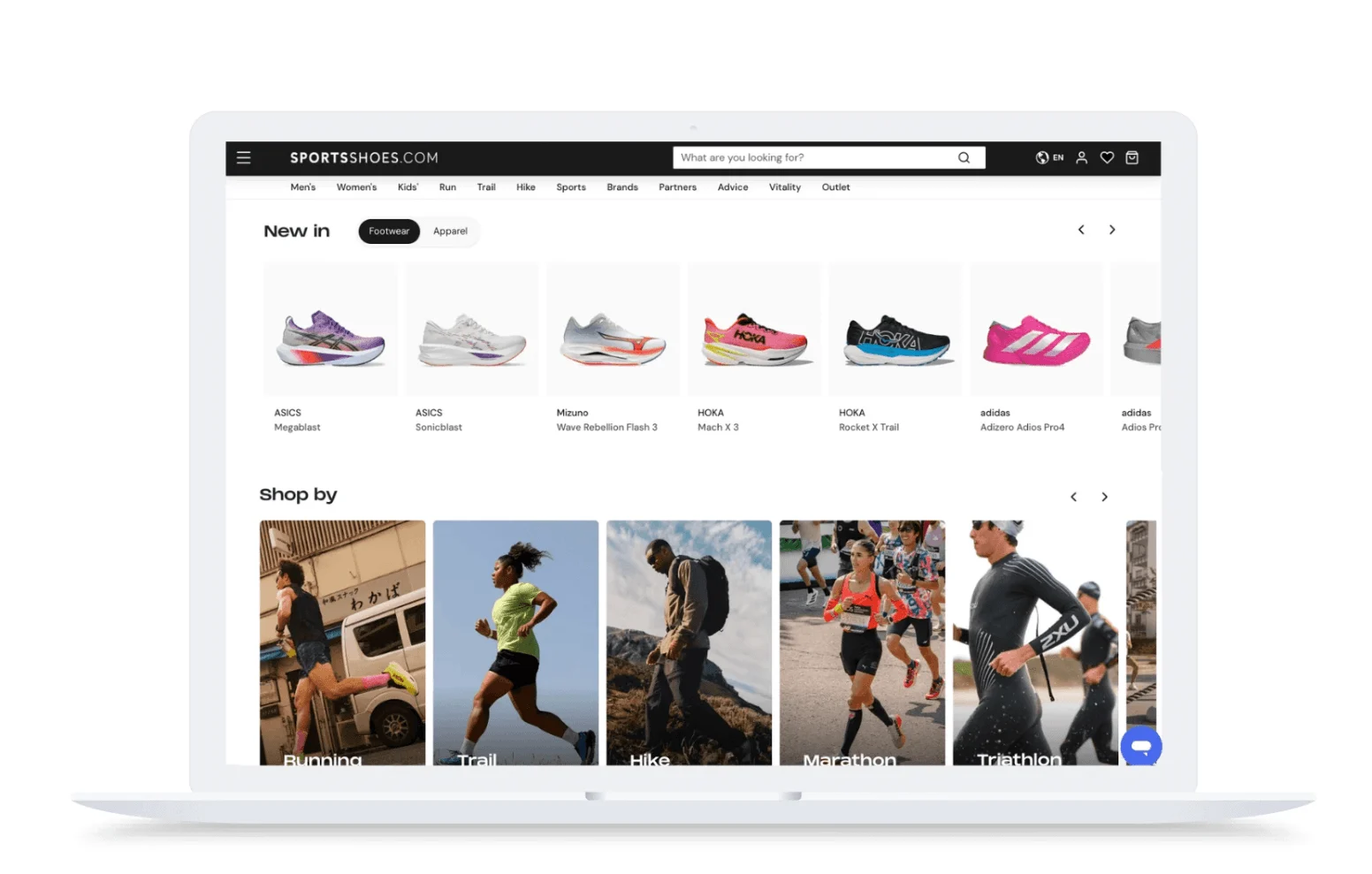
Sportsshoes.com needed a way to scale internationally without adding operational complexity.
With BigCommerce Multi-Storefront, they found it.
Instead of managing separate sites across different platforms, SportsShoes can now run multiple localised storefronts from a single backend. That means greater control (and far less overhead) as the business expands into new markets.
Multi-Storefront gave the team the flexibility to tailor each experience by region while keeping operations centralised. They localised content, currencies, and product assortments for different audiences, all without duplicating infrastructure or workflows. The result is a faster path to market and a more consistent brand experience globally.
Oroton.
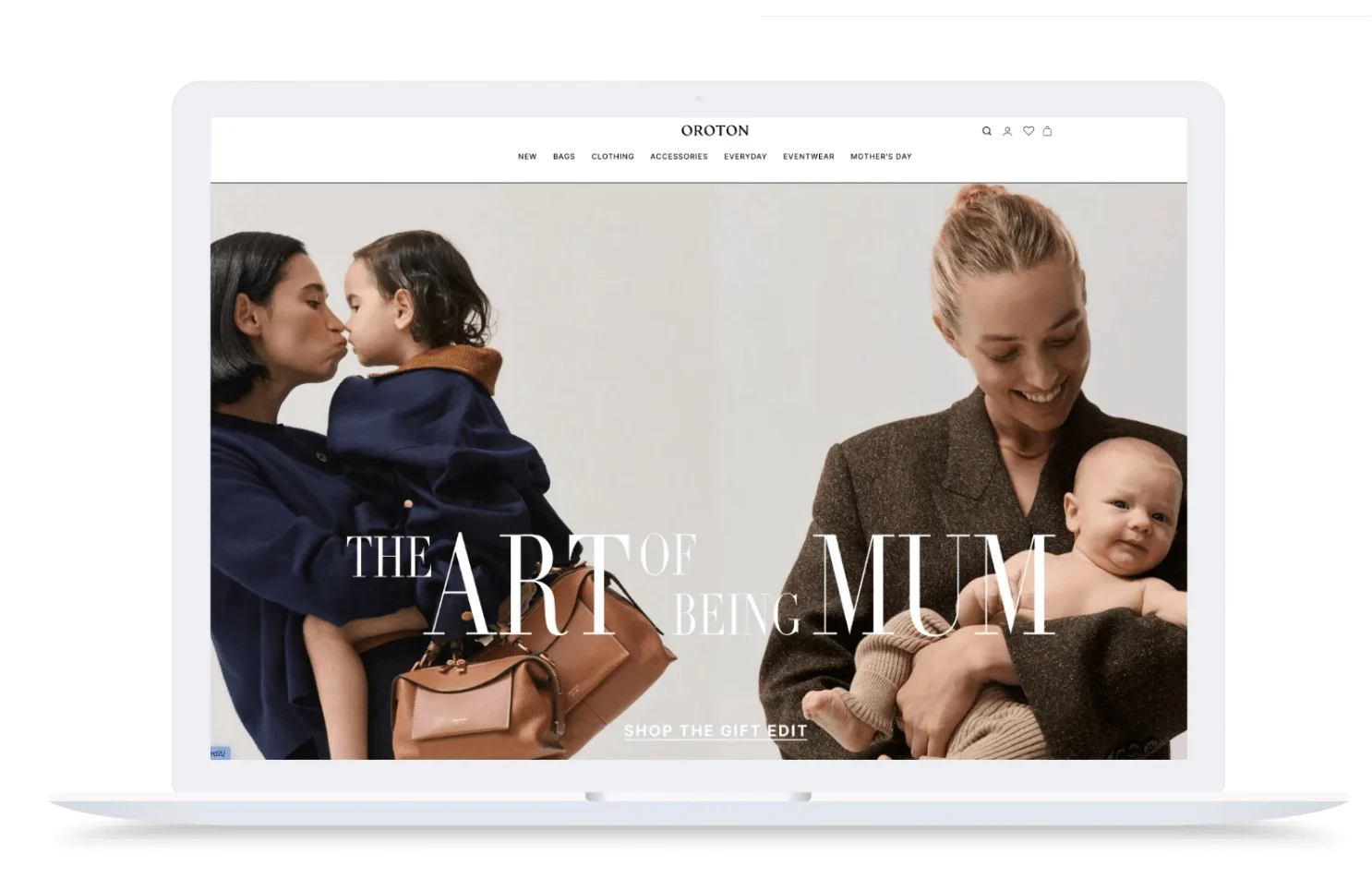
Oroton’s growth highlights what’s possible when direct selling principles meet modern ecommerce infrastructure.
As the brand expanded its digital presence, it needed a way to deliver tailored shopping experiences across regions and customer segments without adding operational complexity. That’s where BigCommerce Multi-Storefront made a measurable impact.
By leveraging Multi-Storefront, Oroton was able to launch and manage multiple localised storefronts from a single backend. This allowed the team to customise product assortments, pricing, and messaging for different markets, all while maintaining centralised control over inventory, orders, and operations.
The result was a more relevant customer experience at every touchpoint. Shoppers could engage with storefronts tailored to their location and preferences, which helped improve conversion rates and drive more sales.
Discount Pool Supply.
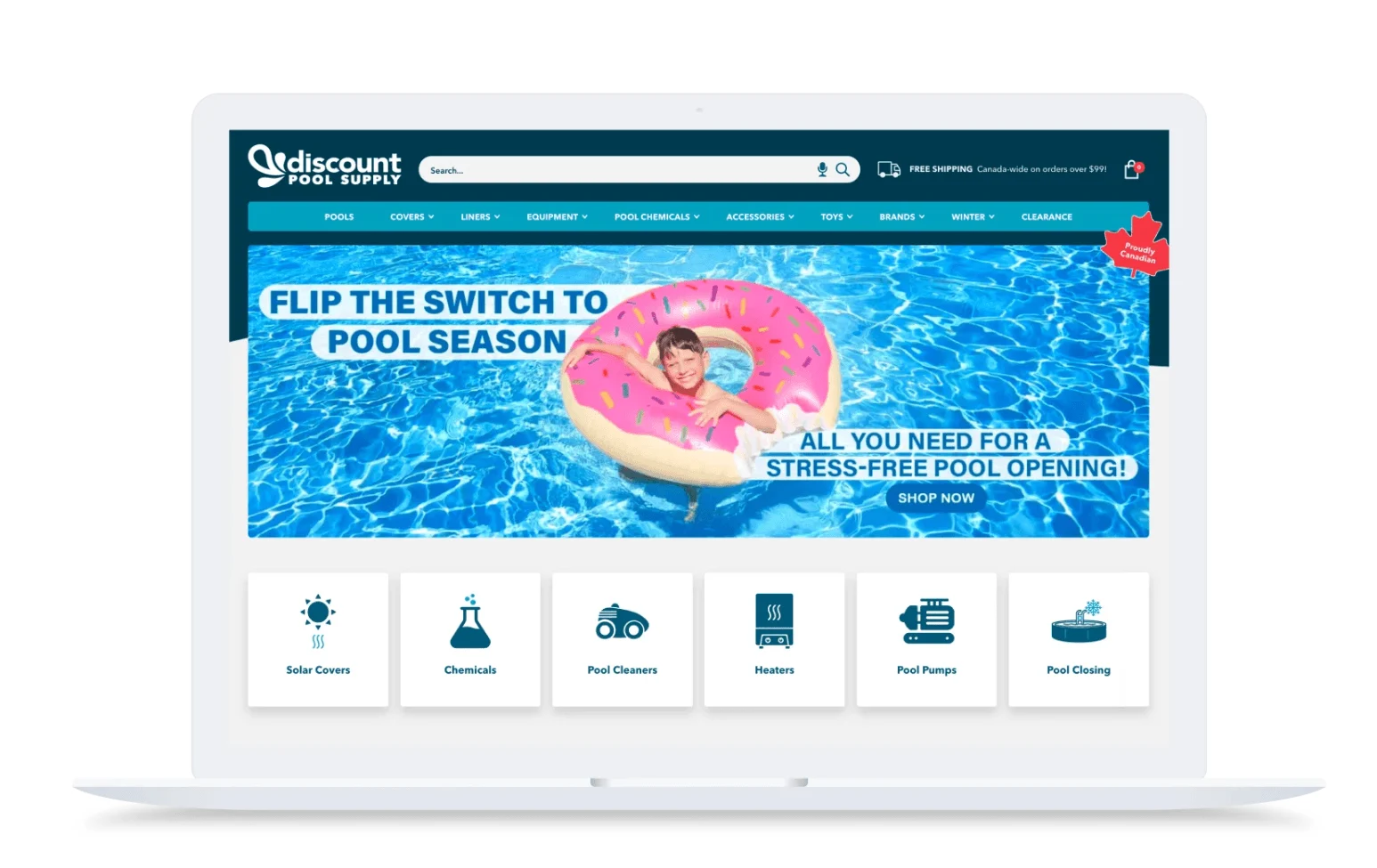
Discount Pool Supply was growing fast, but managing multiple brands and storefront experiences was becoming increasingly complex.
They needed a way to scale without multiplying backend systems.
With BigCommerce Multi-Storefront, they streamlined everything into a single platform. Instead of juggling separate sites, the team can now manage multiple storefronts from one centralised backend, giving them the control and efficiency needed to support rapid growth.
This flexibility is what unlocked their next phase.
Multi-Storefront allowed Discount Pool Supply to create distinct storefront experiences for different customer segments and brands, while still operating from one unified system. They customised product catalogues, pricing, and content by storefront, without duplicating data or adding operational overhead.
That impact is both immediate and long term.
New storefronts can be launched faster, with fewer resources, making it easier to test and expand into new niches. At the same time, centralised management reduces complexity, helping the team stay focused on growth instead of maintenance.
By using Multi-Storefront, Discount Pool Supply turned what was once a scaling challenge into a competitive advantage, enabling them to grow their portfolio of brands while maintaining efficiency and control.
The final word
Direct selling is no longer limited to living rooms or local networks.
It’s become a scalable, digital-first strategy powered by ecommerce.
At its best, direct-selling ecommerce combines two powerful forces: Human connection that builds trust and drives conversion and modern infrastructure that enables scale, efficiency, and global reach
For growing brands, this model offers a clear advantage.
It allows you to expand distribution without relying solely on traditional retail sales or paid acquisition. It creates more personalised customer experiences. And it turns sellers, creators, and advocates into an extension of your brand.
But success depends on the foundation behind it.
Without the right technology, direct selling can become fragmented and difficult to manage. With the right platform, it becomes a unified, high-growth channel.
Learn more about the capabilities built into the BigCommerce platform.
FAQs about direct-selling ecommerce
Yes, direct selling is a legitimate business model used by many established global brands. However, it’s important to distinguish it from illegal pyramid schemes. Legitimate direct selling companies generate revenue primarily through selling products, not recruitment, and typically offer transparent compensation structures, clear product value, and compliance with industry regulations.
No, direct selling is a broad category that includes multiple business models, including single-level marketing sales and multi-level marketing (MLM). MLM is a subset of direct selling that involves recruiting additional sellers and earning commissions from their sales, whereas single-level sales focuses only on individual sales without a recruitment component.
Direct sellers typically earn income through commissions on the products they sell. Depending on the model, they may also receive bonuses, incentives, or a percentage of sales generated by a team they’ve built. Earnings can vary widely based on sales performance, product demand, and the structure of the company.
Well-known direct selling brands include Avon, Amway, and Herbalife. These companies have historically relied on independent sales representatives and have evolved to incorporate digital tools, social selling, and ecommerce capabilities to reach customers more effectively.
Find your favourite features.
Explore all of the capabilities of the BigCommerce platform.