






Written by
Anita J. Temple
B2C Ecommerce
Get The Print Version
Tired of scrolling? Download a PDF version for easier offline reading and sharing with coworkers.
A link to download the PDF will arrive in your inbox shortly.
Key Highlights
B2C ecommerce is the engine of modern retail, driving global growth and reshaping how brands reach and serve customers.
Successful brands blend DTC, marketplaces, subscriptions and more to stay flexible and adapt to evolving buyer expectations.
Seamless, personalised and mobile-first experiences are now essential to winning conversions and long-term loyalty.
Data and AI help brands scale faster, boost AOV and automate operations across marketing, merchandising and support.
The right ecommerce platform enables global expansion, omnichannel selling and scalable growth without technical limits
What Is B2C ecommerce? And why it’s powering the future of retail.
Opening a traditional retail store takes serious capital. Leasing space. Hiring contractors. Installing point-of-sale systems. Staffing up. And that’s all before your first customer walks through the door.
B2C ecommerce changes the equation.
Instead of building shelves, you’re building digital storefronts. Instead of relying on foot traffic, you’re reaching online shoppers anywhere in the world. And while launching an ecommerce business isn’t as simple as “an idaea and a credit card,” today’s ecommerce platforms make it far more accessible — and scalable — than ever before.
B2C (business-to-consumer) ecommerce refers to businesses that sell products or services directly to individual consumers online, generating revenue through digital channels and online sales. If you’ve ordered sneakers from Amazon or scheduled grocery delivery through Instacart, you’ve experienced B2C commerce in action.
Understanding the key differences between B2C and other commerce models, such as B2B or marketplace selling, helps brands choose the right strategy for growth.
Today’s leading brands win by delivering seamless customer experiences, personalised marketing, and frictionless checkout. They use data to understand buyer behaviour and anticipate evolving customer needs across every channel — from marketplaces to social commerce — and the opportunity is accelerating.
According to Forrester, global B2C ecommerce sales will grow at nearly 9% annually through 2028, expanding global ecommerce from roughly $4.4 trillion in 2023 to about $6.8 trillion by 2028 — signalling not just momentum, but transformation.
For ambitious brands, digital retail isn’t just an alternative to brick-and-mortar. It’s the growth engine.
There's a lot to love ❤️
Watch a demo to see the BigCommerce platform in action.
Types of B2C ecommerce business models
Not all B2C ecommerce businesses operate the same way. The model you choose impacts everything from inventory management and fulfilment to marketing strategy and profitability.
Here are the most common B2C ecommerce business models — and how they work in practise.
1. Direct-to-Consumer (DTC)/direct sellers.
The most recognisable B2C ecommerce model is direct-to-consumer (DTC).
In this model, a brand sells products directly to customers through its own ecommerce website, mobile app or storefront — without wholesalers or third-party retailers acting as intermediaries.
DTC brands may:
Manufacture their own products.
Sell private-label goods.
Curate products from other brands.
Why it works:
Higher profit margins.
Full control over customer experience.
Ownership of customer data.
Stronger brand loyalty.
For modern ecommerce brands, DTC isn’t just a sales channel — it’s a way to build lasting customer relationships and differentiate in competitive markets.
2. B2C dropshipping.
Dropshipping is a low-overhead B2C ecommerce model where the retailer doesn’t hold inventory.
Instead:
A customer places an order on your ecommerce store.
The order is forwarded to a supplier.
The supplier handles packaging and shipping.
Because you’re not managing inventory or warehouse space, dropshipping reduces upfront investment and operational complexity.
Why businesses choose dropshipping:
Lower startup costs.
Reduced financial risk.
Flexible product catalogue expansion.
Ideal for testing new product categories.
For entrepreneurs and small businesses, dropshipping offers a faster path to market — though margins and supply chain reliability require careful management.
3. Online marketplaces and intermediaries.
Online intermediaries (marketplaces) connect buyers and sellers without owning the inventory themselves.
These platforms provide:
Built-in audiences
Payment processing
Trust infrastructure
Search visibility
Examples include marketplaces like Etsy and Expedia.
For sellers, marketplace ecommerce can:
Increase reach quickly
Lower customer acquisition costs
Provide validation in new markets
However, brands sacrifice some control over branding and customer relationships. Many successful B2C businesses use marketplaces as part of a broader omnichannel ecommerce strategy.
4. Community-based ecommerce.
Community-based ecommerce starts with shared interests and builds commerce around an engaged audience.
Instead of focusing only on products, brands sell within spaces where trust already exists — turning participation into purchases.
This model often leverages:
Social media groups and online forums
Influencer and creator partnerships
User-generated content (UGC)
Niche communities built around lifestyle or identity
A well-known example is Glossier, which grew from a beauty blog into a global brand by listening to its audience and involving them in product development. By turning customers into advocates, the brand transformed engagement into sustained ecommerce growth.
When done well, community-based ecommerce drives loyalty, repeat purchases and long-term customer value.
5. Subscription and fee-based models.
The subscription ecommerce model charges customers recurring fees in exchange for products or access to services.
This model often includes:
Product replenishment or curated subscription boxes.
Membership programmes with exclusive perks.
Streaming or digital content access.
Tiered pricing for premium experiences.
Perfect examples include BarkBox, a subscription-based ecommerce brand that delivers curated dog products to customers each month and the streaming service, Netflix. Both of these brands combine personalisation with recurring billing, generating predictable revenue while building long-term customer loyalty.
For B2C brands, subscription models increase customer lifetime value (CLV), create steadier cash flow, and deepen engagement over time.
6. Advertising-based models.
In advertising-based B2C ecommerce, revenue comes primarily from selling ad space rather than directly selling products.
These platforms typically:
Attract high volumes of traffic through content
Monetise through paid placements or sponsored listings
Drive purchases for third-party brands
Instagram is a perfect example of this model. It allows brands to promote products through sponsored posts, shoppable ads and influencer partnerships. While Instagram doesn’t manufacture products itself, it plays a powerful role in influencing purchase decisions and driving ecommerce sales.
Advertising-based models are a key part of the broader B2C ecosystem, helping brands reach customers earlier in the buying journey and scale visibility quickly.
Choosing the right B2C ecommerce model.
Many modern brands don’t stick to just one B2C model.
A business might:
Sell DTC on its own website.
List products on marketplaces.
Offer subscription bundles.
Use dropshipping to test new products.
The most successful B2C ecommerce companies build flexible, scalable operations that allow them to evolve as customer expectations shift.
And, with the right ecommerce platform, you don’t have to choose just one path — you can support multiple revenue models from a single backend.
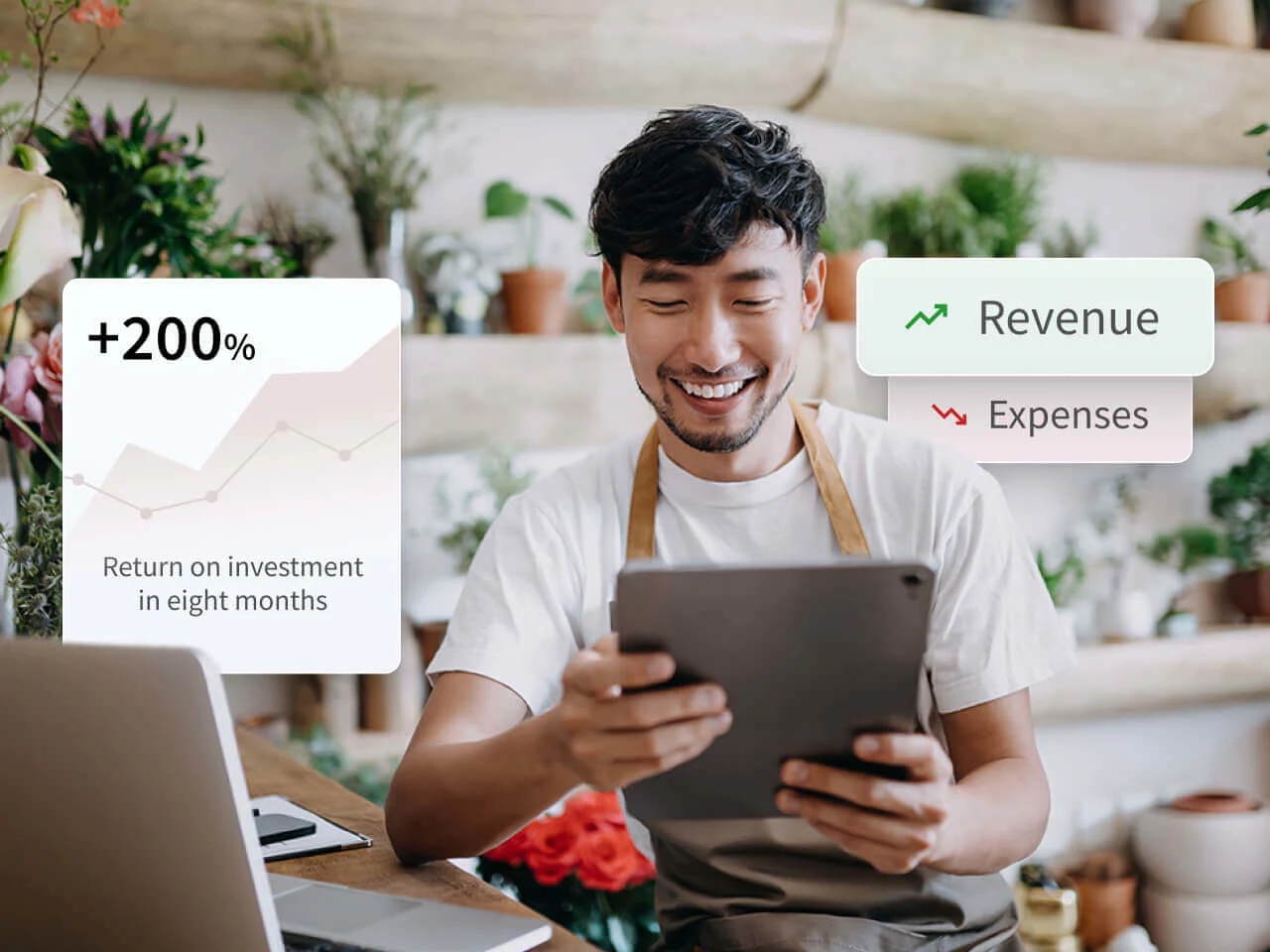
Zero payment fees for embedded providers? Say no more.
We never charge additional fees for businesses that use any of our 20+ embedded payment providers.
Benefits of B2C ecommerce
Every business model comes with tradeoffs. But for brands looking to grow quickly, scale globally and build direct customer relationships, B2C ecommerce offers significant advantages.
Here’s why more businesses are choosing digital-first commerce.
1. Elevated customer experience.
B2C ecommerce allows brands to design experiences around the customer — not the constraints of a physical storefront. The result is a more user-friendly ecommerce experience that reduces friction and increases conversions.
With the right ecommerce platform, businesses can build a high-performing ecommerce site that:
Personalises product recommendations.
Optimises mobile commerce experiences.
Streamlines checkout to reduce cart abandonment.
Offers flexible payment options.
Leading brands bridge online and offline experiences seamlessly, eliminating friction and creating convenience customers now expect.
2. Data-driven decision making.
When you sell online, every interaction becomes measurable.
From traffic sources and on-site behaviour to conversion rates and customer lifetime value (CLV), ecommerce analytics provide actionable insights into how individual customers interact with your brand.. These insights help brands optimise online sales performance and improve marketing efficiency.
Brands can:
Segment your target audience more precisely to deliver relevant offers and experiences.
Optimise marketing spend.
Improve product assortment decisions.
Test and iterate quickly.
Data isn’t just informative — it’s a competitive advantage.
3. Personalised, trackable marketing.
Digital commerce makes highly targeted marketing possible.
With SEO, paid media, social commerce and email automation, B2C brands can meet customers at every stage of the buyer journey — and track performance in real time.
This enables:
Smarter customer acquisition strategies.
Better retargeting campaigns.
Reduced customer acquisition costs (CAC).
Higher conversion rates.
Instead of guessing what works, brands can refine campaigns based on real performance metrics.
4. Global reach without physical overhead.
B2C ecommerce removes geographic limitations.
Whether you’re a small business or an enterprise brand, you can:
Sell internationally.
Launch multi-storefront experiences.
Offer localised currencies and payment methods.
Expand without opening physical locations.
By eliminating rent, utilities and in-store staffing costs, ecommerce businesses can significantly reduce overhead costs reinvest resources into growth, innovation and customer experience.
5. Scalability and flexibility.
Unlike brick-and-mortar operations, ecommerce infrastructure can scale quickly.
Brands can:
Add new products instantly
Expand into new markets
Launch subscription programmes
Test new sales channels
With a flexible backend and omnichannel capabilities, B2C ecommerce businesses can adapt as consumer behaviour evolves.
How to choose the right B2C ecommerce platform
When evaluating platforms, consider:
Scalability: Can it grow with your business?
Flexibility: Does it support your product complexity and selling model?
Integrations: Will it connect to the tools you rely on (payments, CRM, marketing, inventory)?
Total cost: Beyond subscription fees, think about apps, developers, partners and maintenance.
The right ecommerce platform doesn’t just power transactions — it supports growth, agility and a seamless customer experience.
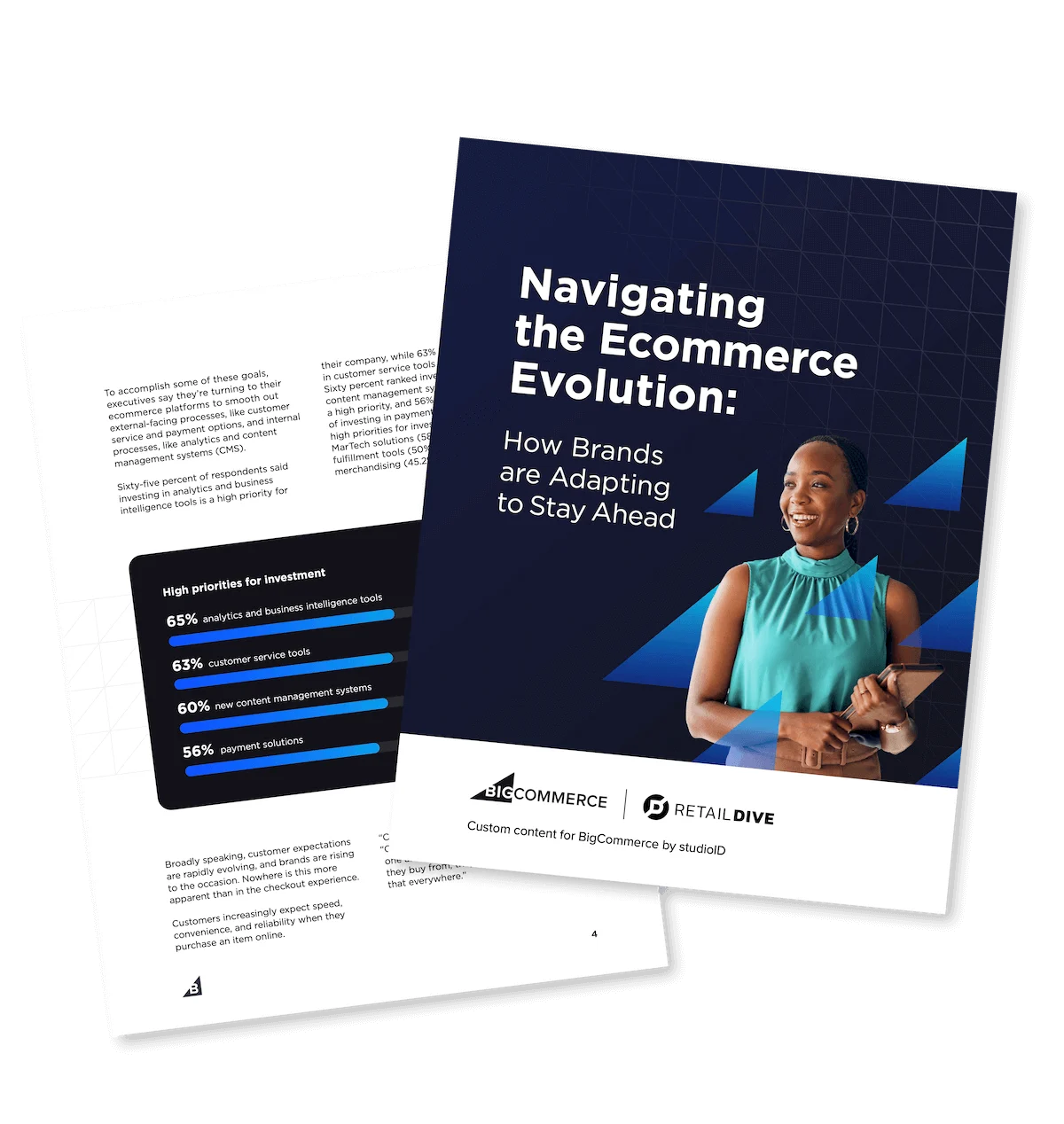
Ebook: How to Stay Ahead in Ecommerce
We surveyed 155 retail executives to see how they're adapting to the ever-changing technology of ecommerce.
Best B2C ecommerce platforms to consider
Choosing the right ecommerce platform is one of the most important decisions a B2C brand can make. Your platform shapes the customer experience, your operational efficiency, and your ability to scale.
Here’s a high-level look at leading B2C ecommerce platforms and where they shine:
BigCommerce.
Best for: Growing brands that need flexibility and scalability. BigCommerce combines robust native features with composable, API-driven architecture and headless capabilities. With multi-storefront support, strong SEO tools, international selling features and no payment fees for 20+ embedded payment providers, it’s designed for brands that want to scale without relying heavily on third-party apps.
For teams seeking more frontend flexibility, BigCommerce supports headless builds and modern storefront development with Catalyst. It also enables brands to run both B2C and B2B on a single platform, making it well-suited for companies managing multiple target audiences as they grow.
Shopify.
Best for: Fast launch and ease of use. Shopify is known for its intuitive setup, reliable uptime and large app marketplace. It’s a popular choice for small brands and startups looking to get online quickly with minimal technical involvement.
However, many advanced features require third-party apps, which can increase monthly costs and create operational complexity over time. Brands that do not use Shopify Payments also incur additional transaction fees. Customisation options (particularly at checkout) are more limited unless upgrading to higher-tier plans, which can make scaling or managing more complex B2C requirements more challenging.
Adobe Commerce (Magento).
Best for: Complex, highly customised enterprise builds. Adobe Commerce offers deep customisation and open-source flexibility, making it suitable for brands with large catalogues and complex requirements. However, its build-heavy model typically requires experienced development teams to manage hosting, security, updates, and ongoing optimisation.
Implementation timelines can be lengthy, and total cost of ownership often extends beyond initial licencing due to infrastructure, maintenance, and customisation needs. As a result, it’s generally best suited for enterprises with strong technical resources and the budget to sustain a highly customised environment.
Salesforce Commerce Cloud.
Best for: Enterprise omnichannel ecosystems. Salesforce Commerce Cloud integrates closely with Salesforce’s CRM and AI tools, making it a logical fit for global brands already invested in the Salesforce ecosystem.
While the platform supports personalisation and large-scale operations, implementation typically requires significant development and partner involvement. Its revenue-based pricing model and ecosystem dependency can increase long-term costs, making it more appropriate for established enterprises than growing brands seeking flexibility.
Other platforms to explore.
Wix Ecommerce: Ideal for small businesses prioritising design simplicity.
WooCommerce: Flexible option for WordPress-first brands.
Square Online: Strong choice for businesses that want POS and ecommerce tightly integrated.
Every platform has trade-offs. The right choice depends on your growth plans, technical resources and how much flexibility you need to evolve with changing customer expectations.
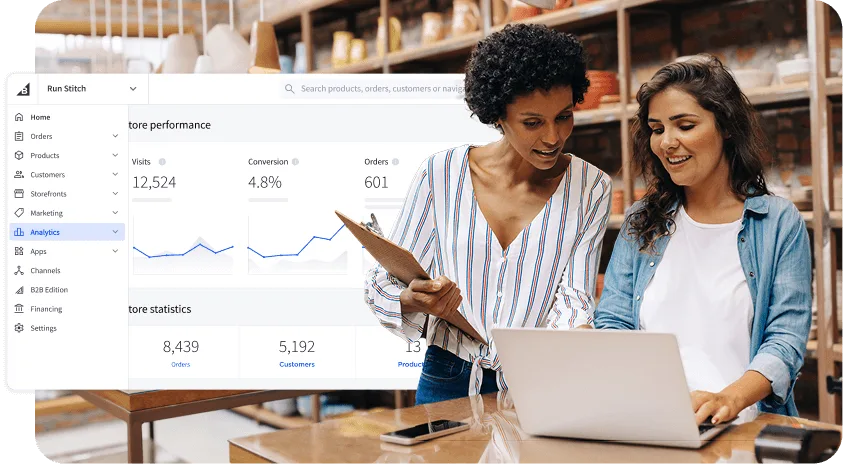
Find your favourite features.
Explore all of the capabilities of the BigCommerce platform.
Examples of B2C ecommerce stores
How do you capture the essence of a brand and communicate it to an easily distracted audience? How do you guide shoppers toward action without losing momentum? And how do you secure that final click to buy?
Those are the questions that keep ecommerce marketers up at night.
With the average shopping cart abandonment rate hovering around 70%, most online shoppers leave without completing a purchase. That makes optimisation more than a nice-to-have — it’s essential.
The three B2C ecommerce brands below have found ways to reduce friction, strengthen storytelling and convert more visitors into customers. Their results offer practical lessons for any business looking to grow online.
Mizuno USA.
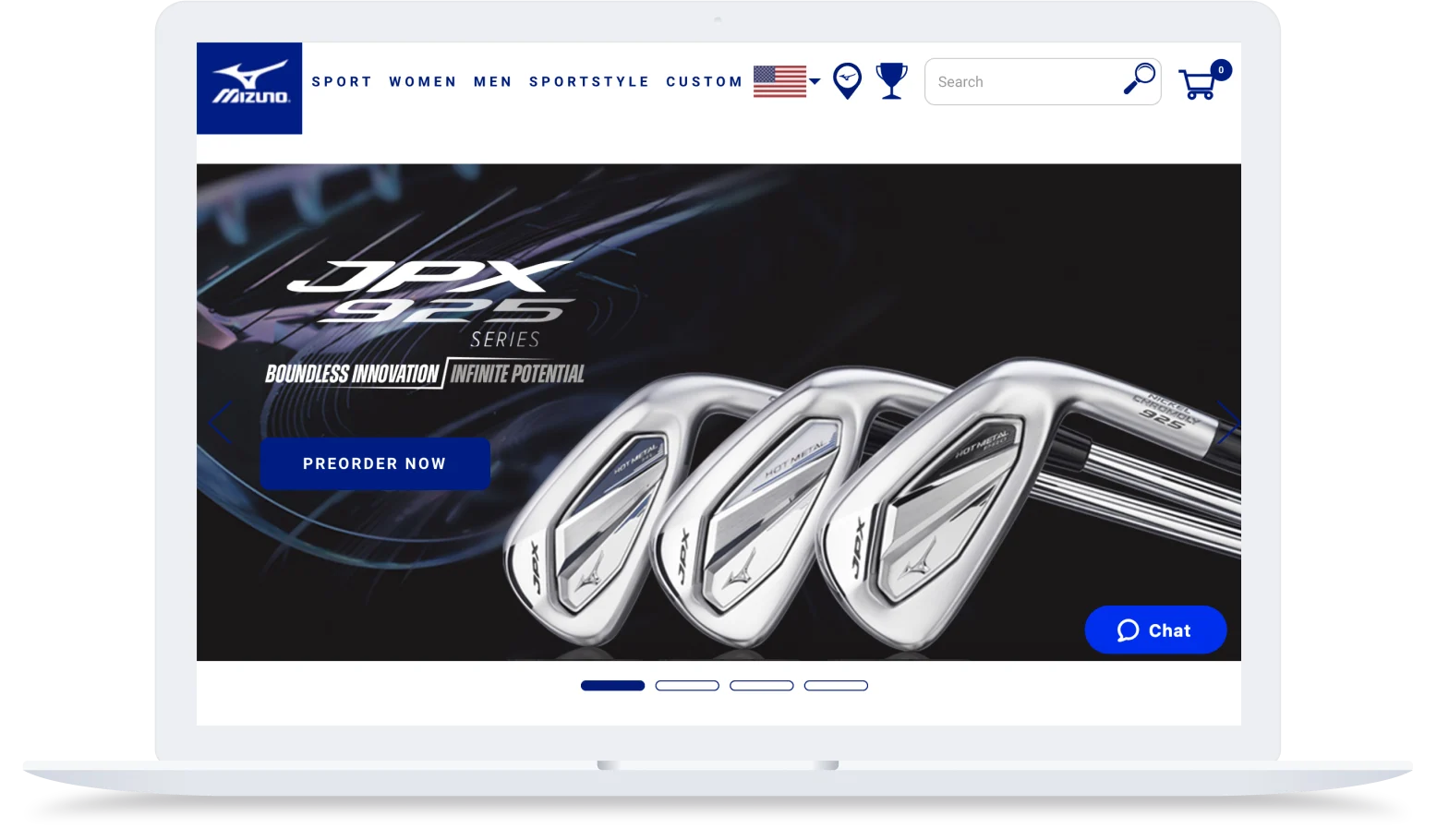
A recognised name in performance sports gear — Mizuno USA was in need of a more agile ecommerce platform to keep pace with rising customer expectations and shifting market demands. Their legacy system struggled with real-time inventory, slow content updates, and a clunky checkout experience, which held back sales and efficiency.
By migrating to a composable commerce solution on BigCommerce, Mizuno USA unlocked greater flexibility, performance, and customer satisfaction. Working with Mira Commerce, the brand integrated advanced order management (Deck Commerce) and a one-click checkout (Bolt) to streamline the entire buying experience. These improvements helped reduce friction across the buyer journey, boost internal productivity and support more dynamic customer experiences. Key results included:
12% increase in average order value (AOV).
90% faster checkout completion times.
40% faster deployment of site content and marketing campaigns.
Mizuno’s transformation shows how the right platform and ecosystem, with real-time capabilities and composable flexibility, can elevate a B2C ecommerce brand in a competitive online landscape.
Yeti Cycles.
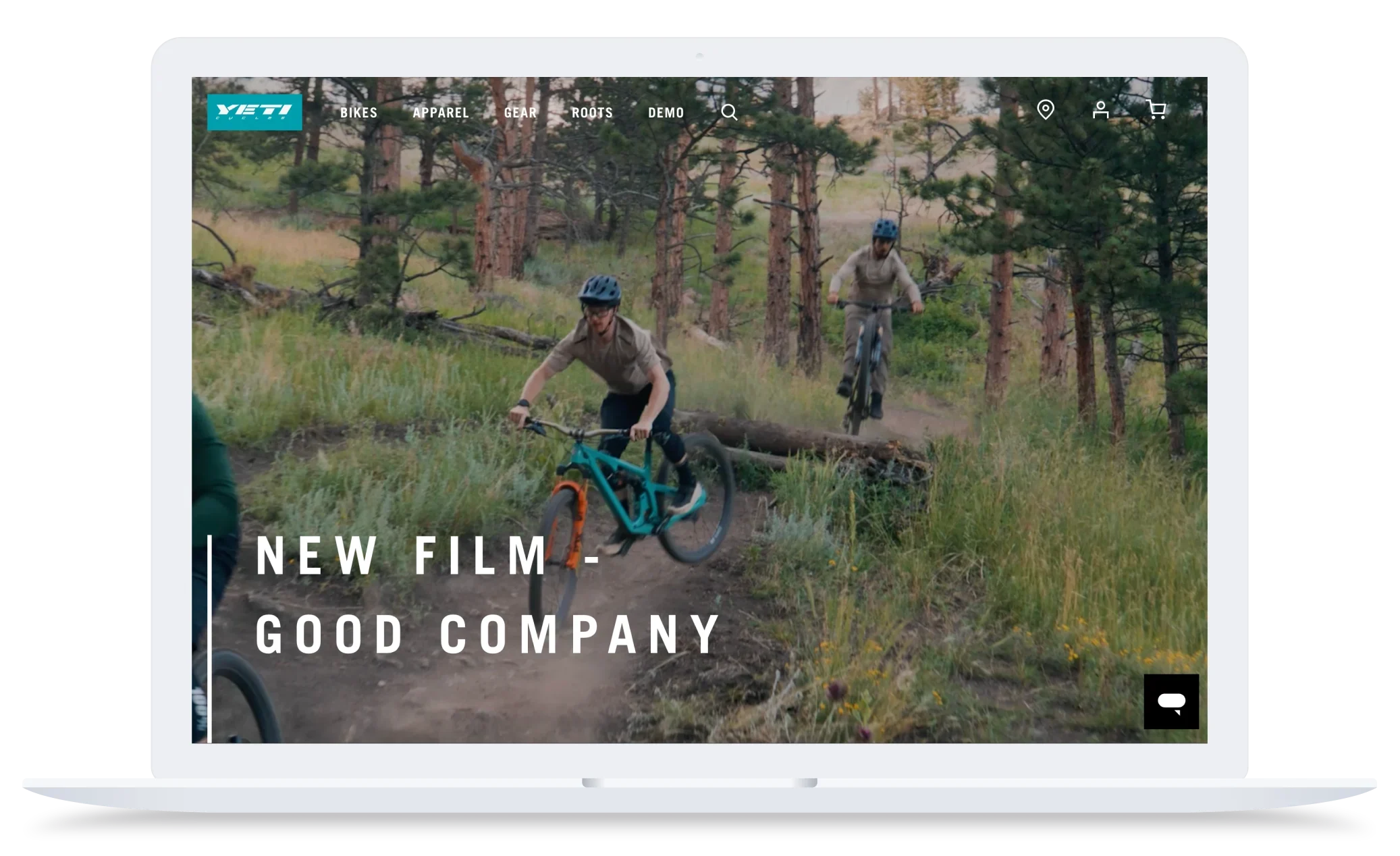
A premium mountain bike brand with a passionate community —Yeti Cycles faced limitations with its old ecommerce stack, which relied on multiple disconnected tools that slowed content updates and product launches. They needed a unified solution that could both reflect their brand’s adventurous spirit and support future growth.
By moving to BigCommerce’s headless architecture, Yeti gained the flexibility to create rich brand experiences that blur the line between storytelling and shopping. The new platform lets the team build pages in minutes instead of months, manage real-time content and support both direct-to-consumer (DTC) and wholesale channels from a single backend.
Results included:
49% increase in page views year-over-year.
18% increase in average time on page, signalling deeper engagement.
Faster launches and more dynamic content experiences than before.
Yeti’s revamped site doesn’t just sell products — it connects customers to the brand’s culture and community, proving that performance-driven commerce can also be immersive and visually compelling.
Saddleback Leather Company.
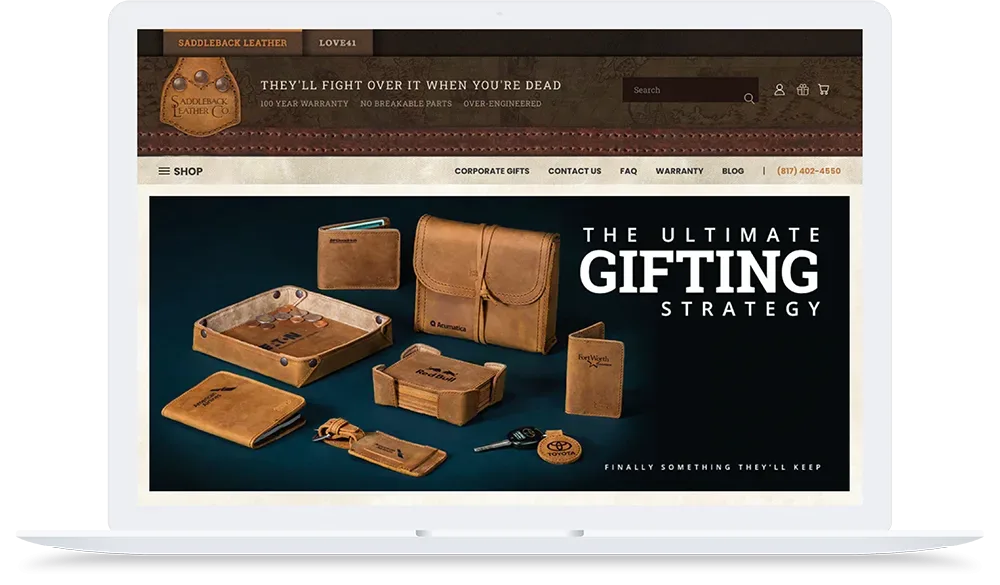
From a small hut in Mexico to a thriving headquarters in Texas two decades later, Saddleback has grown beyond more than just bags. They sell everything from wallets to glass cases. They even launched a new brand, Love 41, but soon realised it would take more than goodwill to improve their website performance and meet growth goals.
They needed a platform with both a stable foundation and one that could be flexible, allowing them to pivot quickly. With BigCommerce, they found a powerful platform backed by a team dedicated to their success.
Their new streamlined operations delivered a 43% increase in revenue, a 40% increase in average order value (AOV), and an 18% increase in site visitors.
How BigCommerce helps B2C companies grow
Frictionless. Full-featured. Flexible. Fast.
Those are the words customers use when describing what BigCommerce does well. Customers also enjoy dedicated support at every step.
Our tech experts understand that ecommerce solutions need to be flexible. BigCommerce gives your business a ready-to-use foundation that’s completely customisable, giving you dozens of features to fit your unique needs.
Convert more shoppers into buyers.
Minimise friction with a fast, intuitive checkout experience that pushes your customers to
buy. Our one-page checkout delivers — enterprise stores using BigCommerce enjoyed a 70.8% conversion rate and a 2.67% visit-to-order conversion rate. The range of payment integrations gives ecommerce storefronts the flexibility to conduct business wherever their customers live.
Manage complexity from one backend.
There’s so much you can sync and manage with BigCommerce, that it’s hard to settle on a few features. But all our features have one thing in common – they help you scale your ecommerce operation.
You can create new storefronts and differentiated shopping experiences; connect your brick-and-mortar POS with your ecommerce storefront; track inventory across multiple channels and integrate third-party services like payments, shipping and accounting for starters.
Increase sales with omnichannel functionality.
Successful ecommerce brands are omnipresent — their products appear everywhere their customers shop. With BigCommerce, you can connect multiple channels from a single store and sell seamlessly across hundreds of destinations.
From pre-built integrations for Amazon, Facebook, TikTok and more to third-party providers like eBay and Mercado Librae, BigCommerce’s omnichannel management simplifies expansion into new marketplaces. For brands with complex catalogue or data requirements, Feedonomics helps automate product feed optimisation, syndication, and order management across global channels.
Together, these capabilities reduce manual work and make it easier to reach new customers while focusing on strategy and growth.
Accelerate global sales.
You can design relevant local online shopping experiences at a lower cost all streamlined on a central backend. From local privacy laws to powerful new payment capabilities, you can now enjoy more personalisation in 14 languages.
Boost checkout conversion with unique, localised checkout experiences for every region, allowing you to seamlessly run a multi-region, multi-storefront business.
Scale business using AI tools.
As ecommerce grows more competitive, AI is becoming a critical lever for differentiation. The next section dives deeper into how businesses can use it to support growth and improve customer experience.
How AI can help B2C companies scale their business
Artificial intelligence isn’t the future — it’s here now, and savvy B2C ecommerce brands are using every type of AI — Generative AI, Predictive AI, and Agentic AI — to drive growth at every stage of the customer journey. From crafting on-brand product content to delivering personalised experiences and automating key tasks, AI helps businesses respond to customer needs in real time and work smarter, not harder.
Here’s how ecommerce teams can put AI to work today.
Write better product descriptions (and boost SEO).
One of the most tedious — yet important — parts of building an online store is writing product descriptions that:
Reflect your brand voice
Highlight value and features
Rank in search results
AI writers can help you do all three faster and more consistently. Using natural language models trained on your style guidelines and target keywords, you can generate product copy that:
Aligns with your brand tone.
Is optimised for search engines.
Answers shopper questions before they’re asked.
Rather than manually draughting dozens (or hundreds) of product pages, AI assists your team in producing content that both search engines and customers love — freeing your merchandisers and content creators to focus on strategy over repetition. Finally, it helps ensure product pages remain clear, consistent, and user-friendly across your ecommerce site.
Convert more lookers into buyers with AI-powered recommendations.
Once a shopper lands on your site, the next priority is to help them find what they want — and discover what they didn’t know they needed.
AI-powered recommendations do exactly that.
By analysing:
What page a visitor is viewing
Recent search behaviour
Purchase patterns across your store.
AI algorithms can suggest complementary products, trending items, or personalised “you might also like” picks that boost average order value (AOV) and reduce bounce.
Whether it’s:
Recommended products on PDPs
“Frequently bought together” widgets
Personalised homepage carousels
These smart suggestions help guide every shopper down a path to purchase — not abandonment.
Use agentic AI to automate business workflows.
“Agentic AI” refers to autonomous systems that can perform multi-step tasks on your behalf — not just answer a single prompt. This shift toward agentic commerce allows brands to automate decision-making across marketing, merchandising, and operations.
For ecommerce teams, that means:
Automated inventory tagging
Dynamic pricing suggestions
Automated content pushing across channels
Chat assistants that resolve customer questions without human hand-offs
Today’s agentic tools can handle workflows that once required full teams, helping you:
Reduce operational bottlenecks
Speed up marketing execution
Deliver real-time customer support
Agentic AI is especially powerful when you connect it to your backend systems — so it can trigger actions (like sending personalised offers) based on real customer behaviour.
Build your own AI capabilities with open-source tools.
If your team has developers and technical resources, you’re not limited to off-the-shelf solutions.
BigCommerce’s open architecture gives developers a flexible starting point to:
Build custom AI models for your brand
Integrate generative tools with your storefront
Tailor AI behaviour to your unique catalogue and audience
Your developers can even “hang 10” on emerging AI workflows — for example:
Personalised search engines
AI-driven creative assistants
Automated merchandising pipelines
By building on an open, extensible foundation, you future-proof your AI strategy and maintain control over execution.
Whether you’re a small DTC brand or a global B2C business, prioritising smart AI investments now will pay dividends as competition intensifies and customer expectations evolve.
The final word
B2C ecommerce isn’t just another sales channel — it’s the engine powering modern retail.
Whether you operate a direct-to-consumer brand, subscription service, or hybrid B2C model, long-term growth depends on adaptability. With the right ecommerce platform, businesses can deliver frictionless buying experiences, expand globally, leverage data intelligently, and adapt as customer expectations evolve.
And those expectations are rising.
Consumers demand speed, personalisation, and seamless mobile experiences. They expect relevant recommendations, intuitive checkout, and increasingly, intelligent interactions powered by AI. The brands that win treat their ecommerce storefront as a dynamic, evolving experience — not a static website.
Success in B2C ecommerce comes down to agility. Invest in scalable technology. Use data to guide smarter decisions. Embrace AI and agentic commerce to move faster and reduce operational friction. Build experiences that deepen loyalty and drive sustainable growth.
The future of retail is digital — and it belongs to brands ready to innovate boldly and scale with confidence.
Ready to modernise your B2C ecommerce strategy? Talk to an expert.
FAQ about B2C ecommerce
Small B2C businesses don’t need enterprise-level budgets to compete — they need precision. Instead of targeting broad, highly competitive keywords, smaller brands can focus on long-tail search terms and niche queries that reflect strong purchase intent. Optimising product pages with detailed descriptions and relevant keywords improves organic visibility.
On social platforms, smaller brands often have an advantage because they can be more authentic and community-driven. Partnering with micro-influencers, encouraging user-generated content, and engaging directly with customers builds trust large retailers often struggle to replicate. With targeted paid campaigns and personalised messaging, small businesses can compete by being more agile and focused on their ideal audience.
The most important KPIs for B2C ecommerce success centre on growth, efficiency, and customer value. Conversion rate shows how effectively your site turns visitors into buyers, while average order value (AOV) measures transaction size. Customer acquisition cost (CAC) evaluates marketing efficiency, and customer lifetime value (CLV) reflects long-term revenue potential.
Tracking cart abandonment rate helps uncover checkout friction, while monitoring overall revenue growth provides insight into business momentum. Together, these metrics guide smarter, data-driven decisions.
Mobile commerce has reshaped the B2C buyer journey. For many brands, smartphones and other mobile devices drive the majority of traffic, and shoppers use their phones to discover, research, and compare products before purchasing. Social commerce, mobile ads and SMS marketing further reinforce mobile-first behaviour.
If an ecommerce site isn’t optimised for mobile performance — including fast load times, responsive design, and streamlined checkout — customers will abandon it quickly. A mobile-first strategy is essential to delivering the seamless experience modern consumers expect.
Building customer loyalty in B2C ecommerce requires delivering value beyond the first purchase. Personalisation plays a key role, from tailored product recommendations to targeted email and SMS campaigns based on past behaviour. Transparent shipping, flexible returns and responsive support also reinforce trust.
Many brands strengthen loyalty through rewards programmes, subscription models. or community-building strategies. Loyalty grows when brands combine convenience, personalisation, and reliability — turning buyers into long-term advocates.
There's a lot to love ❤️
Watch a demo to see the BigCommerce platform in action.