








Furniture Ecommerce: How Home and Garden Retailers are Going Digital
Get The Print Version
Tired of scrolling? Download a PDF version for easier offline reading and sharing with coworkers.
A link to download the PDF will arrive in your inbox shortly.
Generating roughly $256 billion in 2023, the ecommerce furniture industry is poised for tremendous growth, forecasted to reach $436 billion in ecommerce sales by 2029.
Following the global pandemic, furniture shoppers have increasingly sought after convenient, efficient online shopping experiences, setting new standards for the industry. Interactive digital showrooms, product visualization tools, and automated supply chain processes are just a few of the ways that furniture retailers today are shifted toward a more seamless shopping experience.
In this article, we’ll explore how some of the top furniture retailers are embracing digital strategies to stay competitive, and why BigCommerce can give you the best ecommerce foundation for success.
Examples of Furniture Ecommerce Sites
From luxury home furnishings to children’s room decor, BigCommerce has served a wide variety of furniture ecommerce retailers. Let’s take a look at a handful of successful online furniture stores to help you get inspired as you build out your own.
Looking for more furniture ecommerce inspiration? Cheque out our Case Studies page for more success storeys from our very own BigCommerce furniture retailers.
Chair King Backyard Store.
Case Study: Chair King Backyard Store
A Texas-based outdoor furniture retailer, Chair King Backyard Store offers white-glove delivery and localized selling, which meant it needed a customisable checkout experience from its ecommerce platform. Turning to BigCommerce, the furniture brand found the features and functionality to enhance its user experience.
“BigCommerce is a better user experience for our customers, and it's also a better user experience for the team that's supporting it,” explained Kristen Brown, Director of Ecommerce for Chair King. “It's definitely pushed us forward even within our space. I think we have one of the more updated websites for the niche market that we're in.”
Jennifer Taylor Home.
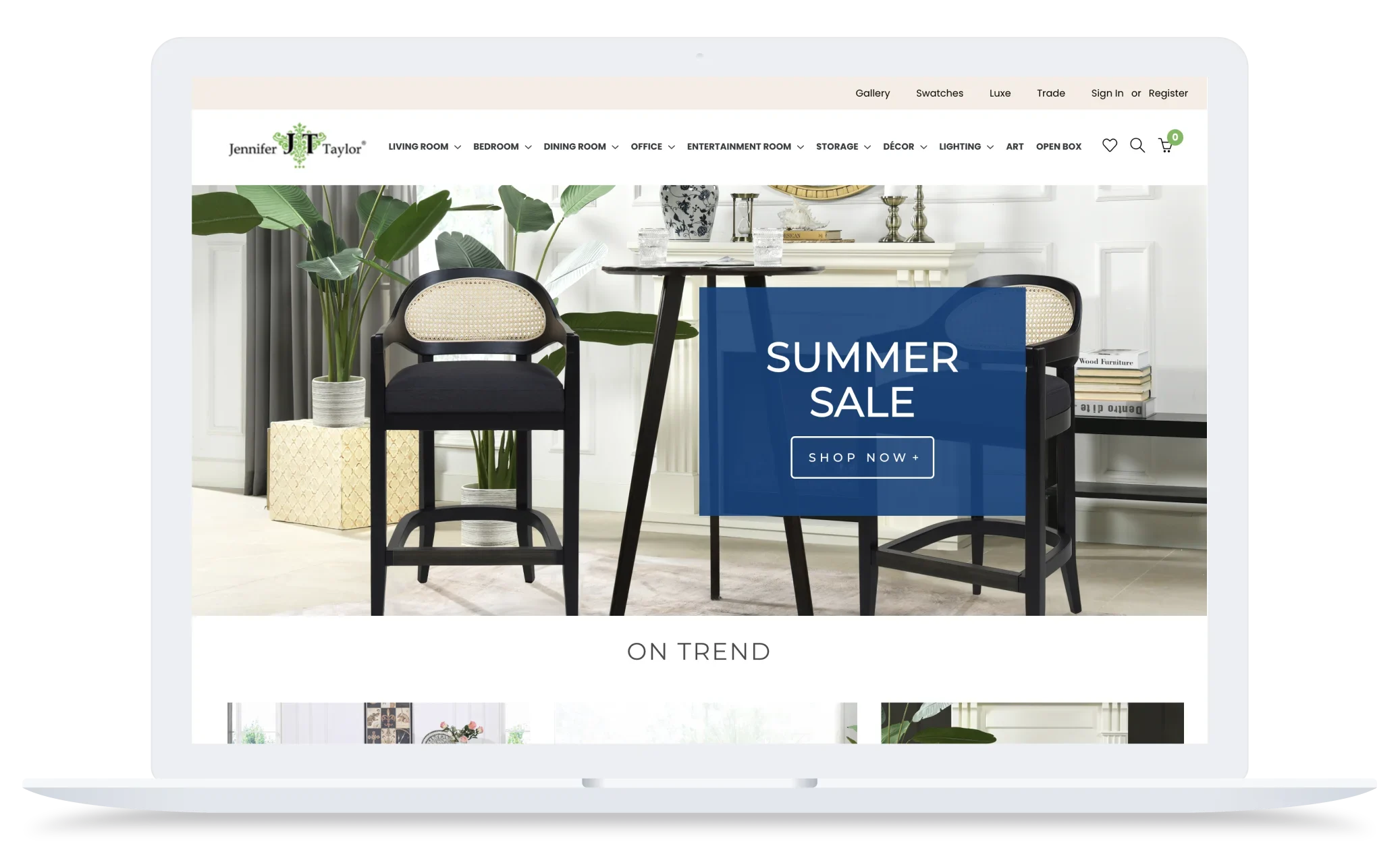
Case Study: Jennifer Taylor Home
Since 1991, Jennifer Taylor Home has grown from a single-office furniture brand to a globally recognized brand. As a growing business, Jennifer Taylor Home knew it needed a platform with the enterprise ecommerce features that its customers expect — one being flexible payment options.
Leveraging BigCommerce’s out-of-the- box features, Jennifer Taylor Home has adopted new payment methods such as Apple Pay, PayPal, Amazon Pay, and more. This new payment flexibility — in addition to an improved checkout experience and connectivity with the brand’s ERP system — ultimately resulted in a 228% increase in customers, a 229% increase in orders, and a 373% increase in ecommerce revenue.
Designerie.
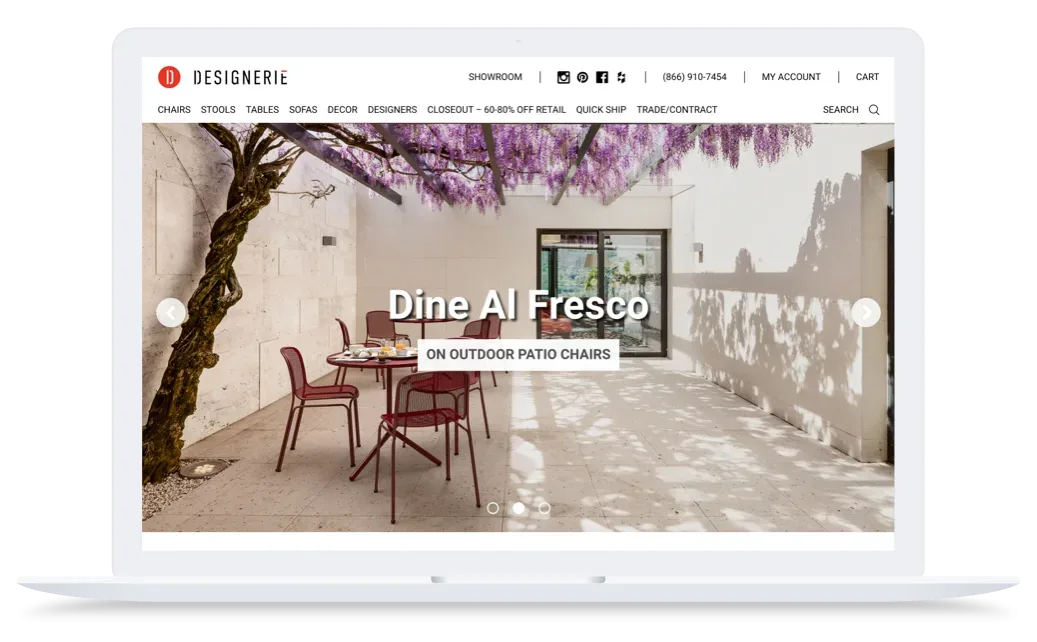
As a hybrid B2C and B2B business, furniture and interior design brand Designerie sought an ecommerce solution that could serve the needs of both audiences. The business needed the ability to allow B2B customers to place wholesale orders on the website and segment customers into four different pricing groups, depending on the client pipeline and their annual purchase volume — which led to their migration to BigCommerce.
“It was clear that BigCommerce’s B2B wholesale functionality was far superior and the ease of integration to our back-end systems made it much better across the board. BigCommerce’s B2B wholesale functionality allows us to dictate customer-specific pricing at a macro level and still offer B2B customers a B2C online shopping experience,” explained Brendon McCarthy, Owner and Managing Director Designerie.
Coco Republic.

Born in Australia in 1979, Coco Republic is a design-led, lifestyle brand with a speciality in homeware and furniture. With an international presence in three countries, the 44-year-old furniture retailer has fostered a memorable brand experience in the digital space.
Even with no web developers in the company, Coco Republic has found the API-enabled openness and flexibility on BigCommerce to empower its team to innovate on the fly — without relying on developers. From launching a new module on its homepage to boosting specific products on search, Coco Republic has found the freedom to make quick site changes, launch new products, and innovate faster.
Wovenbyrd.
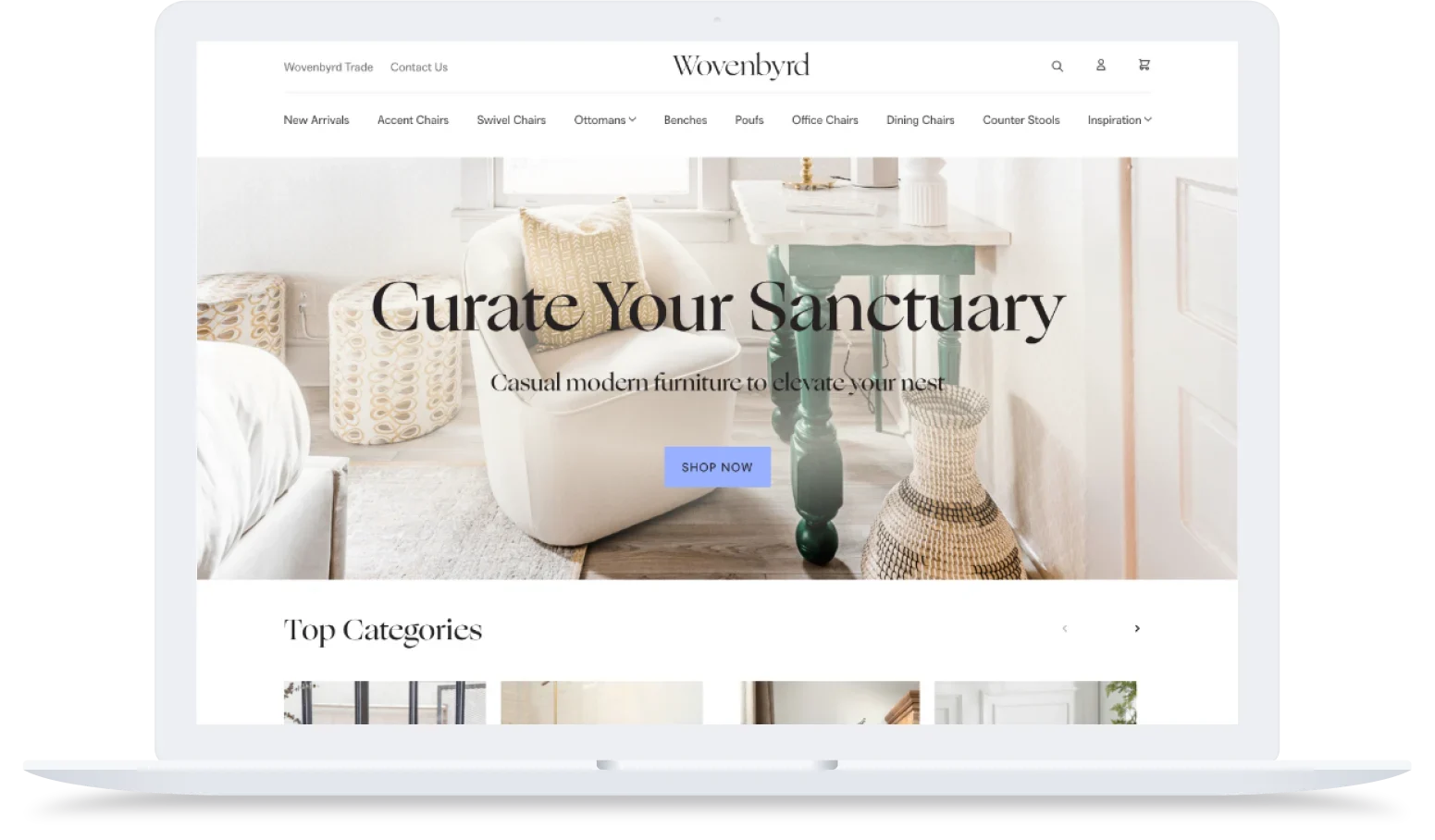
Sleek, simple, and elegant, Wovenbyrd’s home furnishings help individuals build their dream homes easily and affordably. After creating a successful foundation through marketplaces like Wayfair, Amazon, and Target, Baucum decided it was time to grow the business into new ecommerce markets and begin selling direct-to-consumer (DTC).
Turning to BigCommerce, Wovenbyrd has been able to establish trust in their young brand and create a seamless path to purchase for customers.
“With BigCommerce, I have peace of mind,” said Ty Baucum, President and CEO of Wovenbyrd. “I know we’re positioned for growth on a platform that can support all the things we want to do over time.”
QE Home.
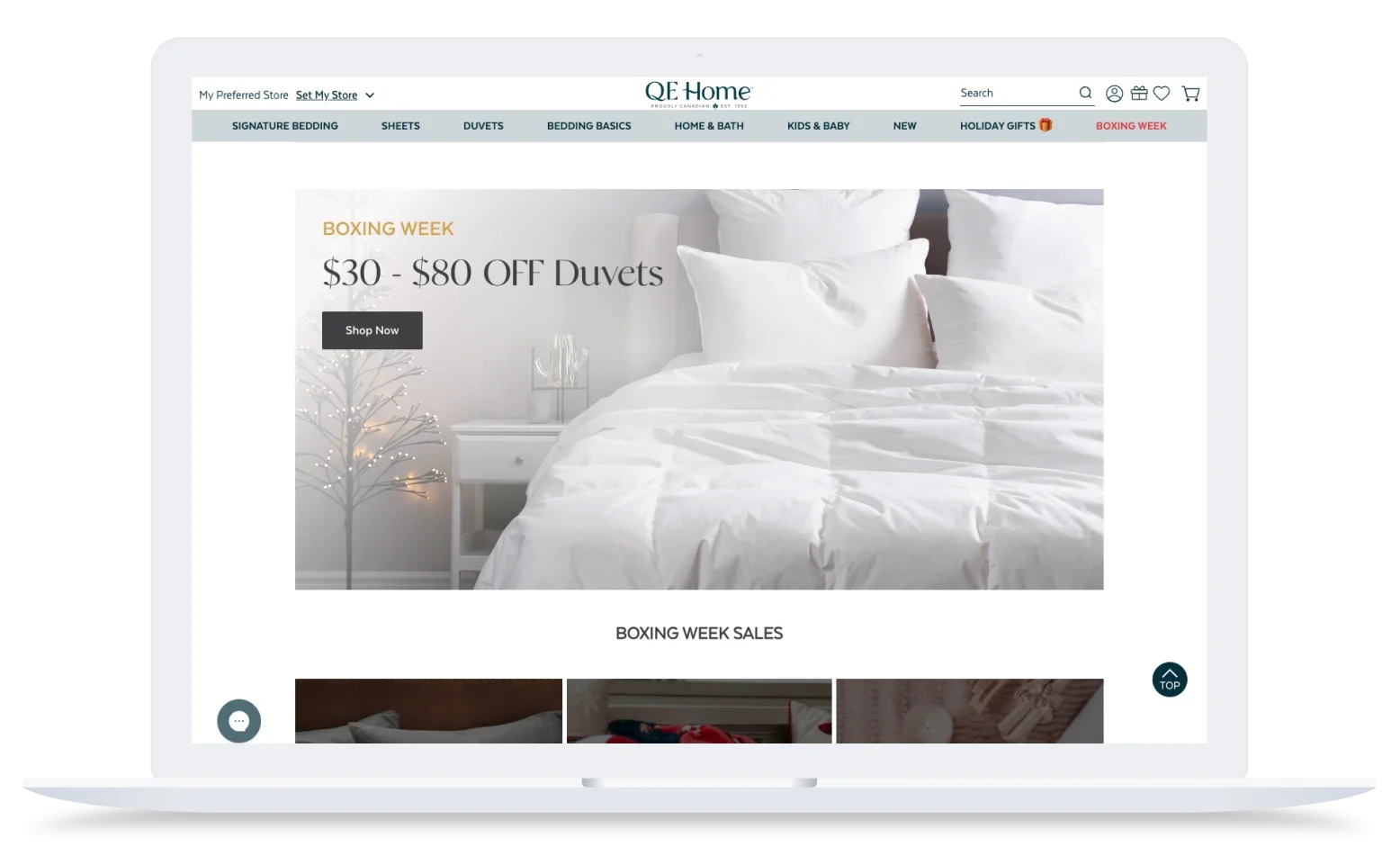
In 1992, Quilts Etc. — now known as QE Home — launched their first two brick-and-mortar stores in British Columbia, Canada. Today, the luxury bedding brand now boasts over 70 locations and a thriving ecommerce presence.
As an omnichannel retailer, QE Home has enhanced the shopping experience by taking advantage of native BigCommerce features, such as Buy Online, Pickup In Store (BOPIS) and multi-location integration. In addition, the brand implemented a “My Preferred Store” feature, allowing customers to see an accurate representation of what’s available throughout QE Home’s various store locations and online inventory.
UPLIFT Desk.
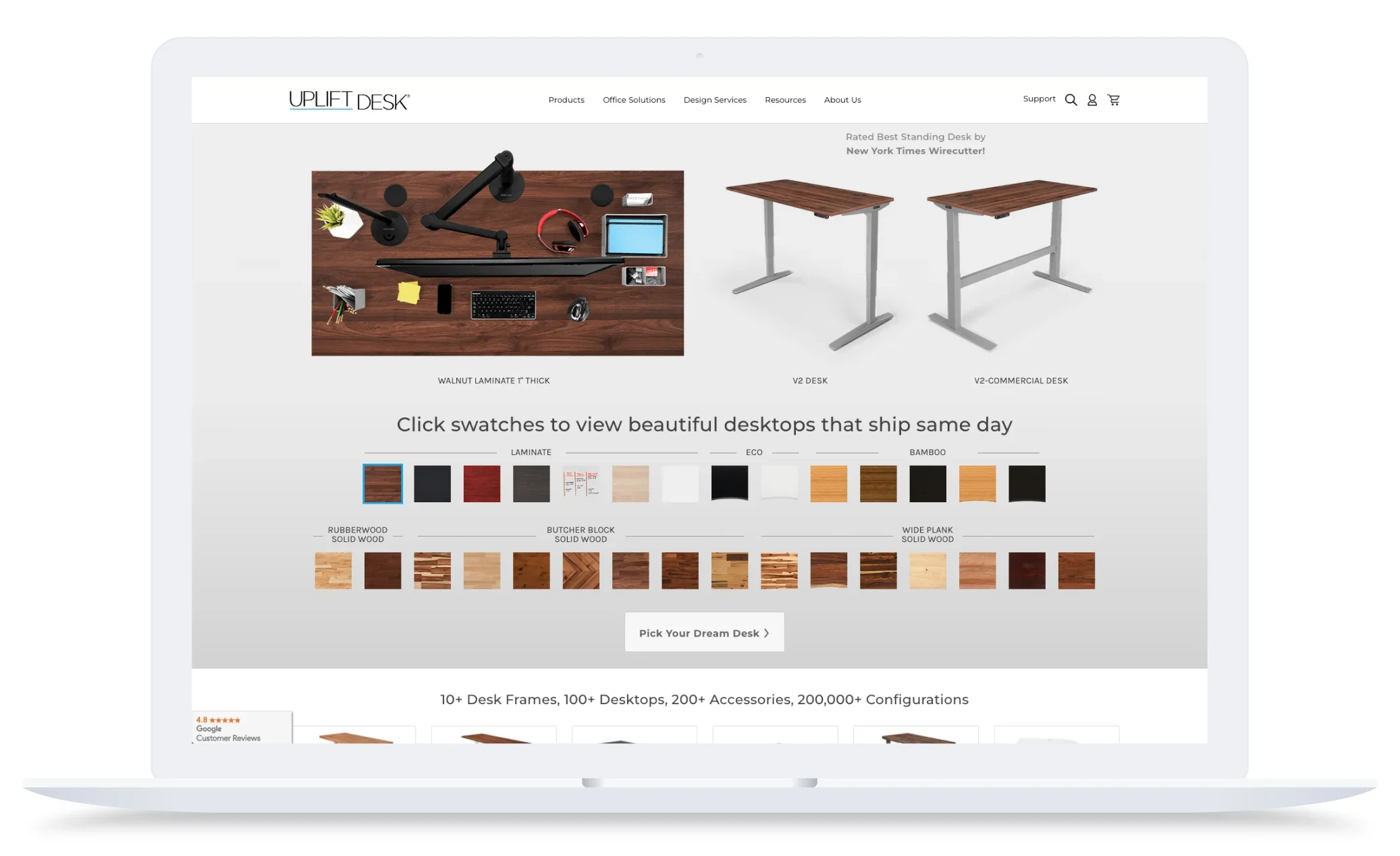
UPLIFT Desk, a manufacturer and retailer of standing desks, ergonomic chairs, and other office accessories, needed the ability to help customers best visualise its products — without seeing them in-person.
To help bring the in-store experience online, UPLIFT DESK leveraged BigCommerce’s flexibility to build a state-of-the-art desk configurator, which allows customers to see their desks being virtually built with various product option combinations such as desk frame, colour, desktop materials, and more. Using the website’s augmented reality (AR) experience, customers can also see a 360 view of their desk, allowing them to zoom in on specific product details and angles.
Home, Garden, & Furniture Ecommerce Ebook
Trends in the home and garden industry, ecommerce strategies, and success stories from BigCommerce customers.
Why ecommerce furniture retailers thrive online with BigCommerce.
Regardless of how great your product line is, the secret to a successful furniture ecommerce strategy is having the right foundation: your ecommerce platform.
Here are a few key ways that BigCommerce can help your furniture business find success online.
Build a beautiful furniture ecommerce website.
As a furniture brand, you’ll want an online store that’s just as eye-catching as the products you sell. Luckily, BigCommerce provides all the tools you need to design your ecommerce store in a way that highlights your brand and lets your products shine.
With an intuitive drag-and-drop Page Builder, your team can swiftly create and manage product page content — no matter your technical expertise. Choose from our library of hundreds of storefront themes (all of which can be further customised to meet your needs), and easily add widgets and blocks of content such as text, images, banners, videos, and buttons to your storefront pages.
Boost conversions and profits.
While there are numerous ecommerce solutions on the market, such as Shopify, Adobe Commerce, and Salesforce Commerce Cloud, the real test of a strong ecommerce platform has always been high conversion rates — and a recent independent study proves BigCommerce can help foster that growth.
According to Incisiv, one of the leading insights firms for consumer industry digital transformation leaders, BigCommerce’s flagship checkout boasted a 2.33% visit conversion rate in May 2023 and June 2023, while the average conversion rate across all markets was 1.94% over the same period. For furniture ecommerce retailers, where high-ticket items often require a more complex buying decision, achieving these higher conversion rates is crucial.
In addition to higher conversion rates, launching on BigCommerce can also boost profits. According to the Total Economic Impact™ of BigCommerce, a composite organisation of merchants with experience using BigCommerce achieved a 211% ROI with a payback period of eight months after migrating from legacy platforms.
Offer convenience with flexible payment options.
Especially for high-ticket items like furniture and appliances, some online shoppers may be hesitant to pay the entire cost up-front. As a result, many furniture brands are turning to alternative payment options — digital wallets, credit cards, and cryptocurrency, to name a few — to help ease the anxiety of making large purchases.
A standout among these payment methods is buy now, pay later (BNPL), which allows customers to pay in instalments rather than paying the entire cost up-front. For furniture businesses, this is a game-changer, as it eases the blow of a high price tag and offers customers greater convenience in making payments.
With BigCommerce, you have your pick of payment providers, including top BNPL solutions such as Klarna, Sezzle, and Affirm. Plus, all of our online payment solutions are PCI compliant and built right into our platform, so you never have to spend time, money, or effort on getting them up and running.
Easily integrate with backend systems.
Especially if you’re migrating platforms or looking to sell B2B, finding a solution that integrates with existing backend systems is crucial. Rather than being bogged down by manual data entry and thus risking human error, these integrations allow for real-time data synchronization.
With BigCommerce, you have the freedom to integrate with the tools you trust. Whether it’s your ERP, OMS, or CRM, we enable you to simplify vital integrations with one-click or customise your automation with open APIs.
Brendon McCarthy, Owner and Managing Director of Designerie, put it this way: “When we were comparing Shopify Plus, it was clear that BigCommerce’s B2B wholesale functionality was far superior and the ease of integration to our back-end systems made it much better across the board.”
Reach more furniture shoppers with omnichannel.
“It is becoming even more critical for ecommerce sellers to be able to meet the needs of their customers and deliver whatever they want, whenever they want, wherever they want, and however they want it,” explains Gopal Pillai, VP of Amazon Supply Chain.
By taking an omnichannel commerce approach, furniture retailers can weave together various touch points — from your ecommerce site to your physical store — to create a consistent, engaging customer experience. From social commerce to digital wallets to buy online, pickup in store (BOPIS), leveraging omnichannel commerce is a proven way to drive furniture sales and convert customers.
In partnership with Feedonomics, BigCommerce has created the ultimate omnichannel selling experience, automating and optimising your product catalogue across channels. Leveraging our platform, you can create seamless experiences that convert across 150+ leading marketplaces, social commerce, and advertising channels.
Solve customer pain points with AI.
Over the past few years, AI (artificial intelligence) has flipped the ecommerce industry on its head, allowing brands to automate every corner of their businesses. From streamlining customer service with chatbots to personalising product recommendations to optimising the supply chain, there’s truly no limit to how AI can impact your business.
And that’s the very reason that BigCommerce is enabling online retailers to harness the power of AI. With BigAI™, our new suite of AI-powered tools and partner integrations, furniture retailers can improve customer engagement, streamline operations, and empower new, creative ways to attract and convert shoppers, from displaying personalised product recommendations to gathering insights with predictive analytics.
Ready to make yourself at home with BigCommerce? Chat with one of our ecommerce experts to learn how you can get started.
Home, Garden, & Furniture Webinar
Learn about trends driving ecommerce growth for home, garden, and furniture brands.
The final word
If the last decade has told us anything, it’s that no industry is immune to digital transformation. From fashion and apparel to food and beverage and even automotive, ecommerce has taken over nearly every retail vertical — and the furniture market is no exception.
Looking to the future of furniture ecommerce, retailers need to be ready to pivot at a moment’s notice, innovate on the fly, and respond quickly to customer expectations — and that all starts with having a strong ecommerce foundation.
For more marketing strategies and insights into the furniture ecommerce industry, download our Home and Garden Ecommerce Guide.
FAQ about furniture ecommerce
While every ecommerce platform offers different native features and integrations, there is some specific functionality that will be particularly beneficial to furniture retailers. Keep an eye out for ecommerce platforms that offer:
Multi-storefront capabilities: Add new brands, regions, and segments, and manage them all from one platform.
Innovate checkout features: Think one-click checkout, freedom of payment choice, BOPIS, and Buy with Prime.
Backend integrations: Integrate with leading CRM, ERP, PIM, and more.
Omnichannel: Create a seamless online to offline experience with data aggregation, catalogue syndication, and order syncing.
B2B features: Functionality, such as customer groups and price lists, that enables interior designers and other trade customers to buy from you online.
Some of the top trends in furniture ecommerce include the rise of augmented reality (AR) to bridge the gap between online and offline experiences, virtual design consultations, omnichannel commerce, and eco-friendly and sustainable product offerings.
For more trends and predictions for 2024, cheque out our Home, Garden, and Furniture Report.
When it comes to marketing your furniture ecommerce company, the sky’s the limit. However, some good places to start might be leveraging content marketing, SEO, social media advertising, influencer partnerships, and email campaigns. Offering personalised recommendations through AI, and creating engaging video content showcasing product use and customer testimonials can also significantly boost customer satisfaction and drive online sales.