






Ecommerce Website Cost (The Complete 2026 Guide)
Get The Print Version
Tired of scrolling? Download a PDF version for easier offline reading and sharing with coworkers.
A link to download the PDF will arrive in your inbox shortly.
Key highlights:
Ecommerce website costs can range from $0 to $250,000+, depending on your platform, customisation needs and business complexity.
Your ecommerce platform choice has the biggest impact on total cost of ownership, influencing hosting, integrations, and ultimately your scalability.
Backend development alone can range from under $5,000 to $50,000+, with enterprise builds climbing higher.
Ongoing costs — including hosting, payment processing, security and marketing — add up quickly and should be budgeted from day one.
Choosing a flexible platform like BigCommerce can reduce custom development costs and eliminate fees as you grow.
Consumer expectations have changed. Buying online is no longer a convenience — it’s the default. According to Statista, 2024 global retail ecommerce sales reached an estimated $6 trillion U.S. dollars.
But building an ecommerce website isn’t just about revenue potential. It’s about understanding the real costs — upfront, ongoing, and long term. From ecommerce software and hosting to design, development, and payment processing fees, the total investment can vary widely depending on your business model and growth plans. Here’s a rough breakdown.
Build | Cost Range |
Basic to Mid-Range | ~$0–$5,000 |
Small to Medium Business | ~$5,000–$25,000 |
Custom / Mid-Enterprise | ~$25,000–$80,000+ |
Complex or Enterprise | ~$80,000–$250,000+ |
Source: monocubed
In this guide, we’ll dig into the cost of building an ecommerce website, what drives pricing up or down, and how to calculate the total cost of ownership before you commit.

There's a lot to love ❤️
Watch a demo to see the BigCommerce platform in action.
Pricing depends on your business needs
Your ecommerce platform is the foundation of your online business. Just like a building depends on structural integrity, your ecommerce website’s performance, scalability, and long-term success depend on how well your platform aligns with your target audience, catalogue complexity, sales volume, budget, and growth goals.
Without that clarity, it’s easy to overspend on unnecessary features or choose a solution you’ll outgrow within a few years. The right platform should support where your business is today — and where you plan to take it.
Unique functionality requirements.
Every business has different technical needs, and those requirements directly impact the total cost. The more complex your product catalogue or customer experience, the more important it is to choose a flexible platform that can support those demands without excessive custom development.
Personalisation features
If you sell configurable or customisable products, your product pages must handle dynamic options, pricing adjustments, and real-time inventory updates. BigCommerce customer Ventum Racing, for example, built a custom bike builder that allows shoppers to configure their ideal bike using live inventory data — demonstrating how the right platform can power advanced personalisation without compromising performance.
Advanced search and filtering options
Businesses with large catalogues — especially those managing hundreds of thousands of SKUs — need advanced search and filtering capabilities to help customers quickly find the right products. This is particularly critical for B2B sellers, where buyers rely on precision and speed, as seen with companies like London Tile Company.
Advanced analytics and reporting
Data drives modern ecommerce strategy, so your platform should integrate seamlessly with leading analytics tools. BigCommerce integrates directly with Google BigQuery, enabling businesses to access powerful reporting and data insights through the backend without requiring complex infrastructure investments.
Complex integrations.
Your ecommerce platform must connect smoothly with the rest of your technology stack, including ERP systems, PIM tools, and CRM platforms. Choosing a solution with open APIs and robust integration capabilities helps protect your existing investments while reducing manual processes and data silos.
BigCommerce’s open architecture makes it easier to integrate critical business systems, giving growing brands the flexibility to scale without rebuilding their infrastructure.
In-house costs vs agencies.
Building an ecommerce website can be managed internally or through an external agency, and each approach comes with tradeoffs. Agencies provide specialised expertise and faster execution, but often come at a higher cost, while in-house teams offer greater control and long-term ownership but require upfront investment in talent and resources.
The best choice depends on your budget, internal capabilities, and project complexity — and should align with your long-term ecommerce strategy, not just your initial launch timeline.
Zero payment fees for embedded providers? Say no more.
We never charge additional fees for businesses that use any of our 20+ embedded payment providers.
General ecommerce website costs
Launching an ecommerce website involves more than a one-time build. From startup expenses to monthly subscriptions and ongoing maintenance, the total investment depends on the technology you choose and how much responsibility you want to manage internally.
Understanding these baseline costs upfront helps you budget more accurately — and avoid surprises as your business scales.
Ecommerce software costs.
Ecommerce software pricing varies based on features, flexibility, and level of support. Some platforms offer limited out-of-the-box functionality at a lower price point, while others — like BigCommerce — provide enterprise-grade capabilities, open APIs, and built-in features that reduce the need for costly third-party apps.
Choosing the right ecommerce platform isn’t just about monthly subscription fees. It’s about evaluating the total cost of ownership, including scalability, performance, and whether the platform charges additional fees as you grow.
Domain name costs.
Domain registration is typically an annual expense unless you purchase multiple years upfront. In general, most cost between $2 and $20 per year, depending on the registrar and extension (e.g., .com, .shop), though premium domains purchased through brokers or auctions can cost significantly more.
While relatively inexpensive, your domain plays an important role in brand credibility and long-term visibility.
Ecommerce hosting costs.
After securing a domain, you’ll need reliable web hosting to keep your ecommerce website live and preformant. Cloud-based platforms like BigCommerce bundle web hosting into the subscription, eliminating the need to manage third-party providers or server infrastructure.
This built-in approach simplifies maintenance, improves uptime, and ensures your storefront can handle traffic spikes without additional configuration.
Self-hosting costs
Self-hosting gives you full control — but also full responsibility. You’ll need to invest in servers, infrastructure, security, monitoring, and the technical talent required to manage it all, which can significantly increase upfront and ongoing expenses.
Beyond hardware and physical space, you must account for maintenance, updates, and risk management, making self-hosted ecommerce a resource-intensive option.
SaaS platform hosting costs
With SaaS (Software-as-a-Service) ecommerce platforms, hosting is bundled into your monthly subscription, which can range from $80-$730 per month depending on traffic, revenue, and plan tier. For many businesses, choosing an all-in-one ecommerce website builder simplifies hosting, security and infrastructure management while reducing operational overhead.
In addition, businesses that choose SaaS providers benefit from more predictable monthly costs, which makes budgeting easier than with a self-hosted infrastructure. And, since infrastructure costs are spread across many customers, you’re often able to gain enterprise-level reliability at a fraction of the cost of maintaining it independently.
SSL certificate costs.
An SSL certificate typically ranges from $8 to $1,000 per year, though many SaaS ecommerce platforms include SSL as part of their service. SSL encryption protects customer data during transactions and is essential for building trust and meeting modern security expectations.
Search engines may also factor HTTPS security into rankings, making SSL both a security and visibility consideration.
Data backup costs.
Regular data backups protect your product information, customer records, and order history from unexpected loss. Data backup costs vary depending on site size and storage needs, but skipping this step can be far more expensive in the long run.
Many hosted ecommerce platforms include automated backups, reducing the need for separate solutions.
Payment processor costs.
Credit card and digital payment processing fees are easy to underestimate — especially since they scale with your revenue. Most credit card processors charge a percentage of each transaction plus a fixed fee.Costs vary based on the payment methods you offer, the currencies you accept, and the regions where you sell.
Here’s how it breaks down:
PayPal Checkout: 3.49% plus a fixed fee based on transaction location
Stripe Standard: 2.9% plus $0.30 per transaction
Authorize.net: 2.9% plus $0.30 per transaction, plus a $25 monthly fee
These fees are just one example of additional costs that increase as your revenue grows. And, they don’t account for any fees that your bank may charge. In reviewing the overall costs for payment processing, WooCommerce and BigCommerce offer the lowest prices in general. They also provide some of the most flexible options for accepting payments.
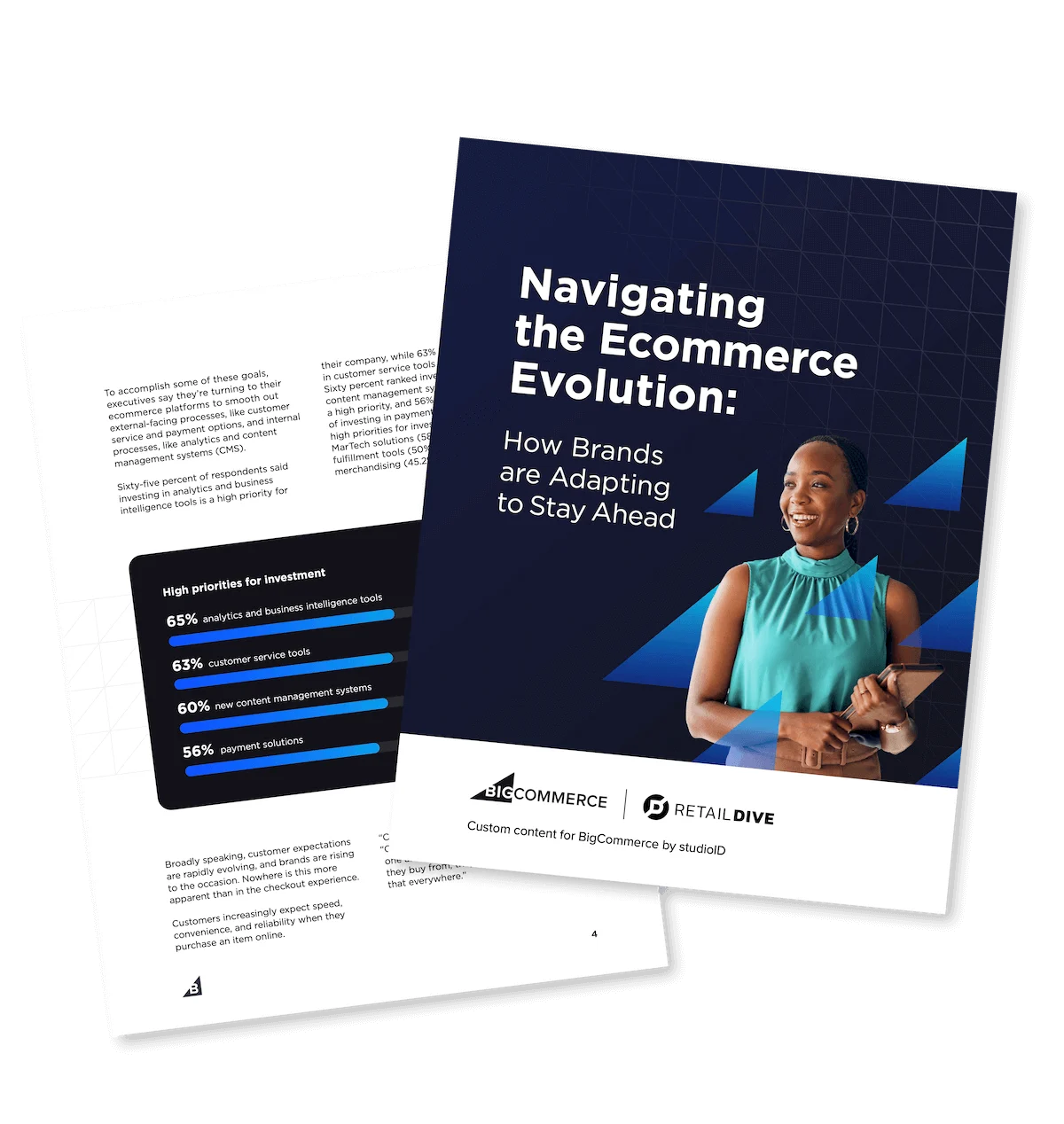
Ebook: How to Stay Ahead in Ecommerce
We surveyed 155 retail executives to see how they're adapting to the ever-changing technology of ecommerce.
Costs associated with building an ecommerce store
Once your foundation is in place, the real build begins. Development, design, and customisation decisions will significantly influence the total cost of building your ecommerce website — especially as complexity increases.
Here’s where investments can scale quickly depending on your goals.
Backend web development costs.
Backend web development powers everything customers don’t see — including server-side logic, databases, integrations, and APIs that keep your ecommerce store running smoothly. Costs vary widely based on complexity, required technologies, developer expertise, and geographic location.
According to independent development cost analyses, ecommerce backend development can range from under $5,000 for simple implementations to $50,000+ for complex, enterprise-grade systems. Platforms with robust APIs and flexibility — like BigCommerce — can reduce custom development requirements, while fully open-source platforms often require heavier engineering resources to achieve similar functionality. This helps businesses avoid expensive custom-built infrastructure when out-of-the-box capabilities already meet their needs.
Frontend web design costs.
Ecommerce website design, often refered to as “frontend” design, determines how your site looks and feels to shoppers. Most major ecommerce platforms offer pre-built themes, which can range from free to approximately $100–$200, while fully custom storefront designs can cost significantly more depending on scope and developer rates.
BigCommerce provides access to free and premium themes, including Cornerstone — a flexible, conversion-optimised theme built for promotions, large catalogues and responsive performance across devices. On more development-heavy platforms, businesses may need additional plugins or custom code to achieve comparable functionality.
UI and UX design costs.
User interface (UI) and user experience (UX) design shape how customers interact with your ecommerce store, influencing everything from navigation to checkout flow. Strong UX and UI design can directly improve engagement, conversion rates, and average order value.
Costs depend on project scope, research depth, and design expertise. Basic optimisation may be relatively affordable, while enterprise-level UX strategy — including testing, prototyping, and behavioural research — requires a larger upfront investment.
Agency costs.
Hiring an ecommerce development agency can accelerate timelines and provide specialised expertise across multiple disciplines. Agencies typically offer services that include backend development, frontend design, UX strategy, ecommerce consulting, mobile app design, and broader digital strategy.
While agency partnerships can drive faster execution and innovation, costs vary based on project complexity and scope. Businesses should weigh agency fees against internal capabilities and long-term ownership considerations.
Custom software development.
Custom ecommerce software development enables businesses to build entirely bespoke functionality tailored to their operational or customer experience needs. This approach can deliver competitive differentiation, performance gains, and deeper system integration.
However, custom development typically carries a premium price due to the time, technical expertise, and ongoing maintenance required. While a fully custom-built ecommerce solution may offer you maximum control, it’s important to recognise that as the complexity, team size, and long-term support needs of your business increase, so do your costs — making it essential to evaluate whether built-in platform capabilities can achieve the same outcomes more efficiently.
Ongoing ecommerce costs to consider
Launching your ecommerce website is only the beginning. Ongoing website maintenance and management are critical to protecting performance, security, and long-term growth — and these recurring expenses should be factored into your total cost of ownership from day one. Failing to account for these additional costs can significantly impact your total cost of ownership.
Typical ongoing ecommerce costs include hosting, domain renewals, SSL certificates, security updates, performance optimisation, content management, and technical support. While some responsibilities can be handled in-house, more complex issues may require external expertise, making consistent budgeting essential to maintain uptime and customer trust.
Data backups.
Regular data backups protect your product catalogue, customer information, and transaction history from unexpected loss. Without a reliable backup strategy, businesses risk losing revenue, operational data, and valuable development time.
Costs for data backups generally depend on site size and storage requirements, though many SaaS ecommerce platforms include automated backups as part of their service.
Inventory management.
Inventory management is another ongoing operational cost, whether managed internally or through a third-party logistics (3PL) provider. Expenses may include inventory software, warehousing, fulfilment services, and shipping fees — all of which directly impact margins and customer experience.
As order volume increases, investing in integrated inventory and order management systems can help reduce errors and improve efficiency.
Security.
Beyond an SSL certificate, ecommerce businesses typically invest in additional security measures to protect against fraud, data breaches, and cyber threats. These tools often operate on a monthly subscription model and may include firewalls, monitoring services, and compliance support.
Choosing a secure ecommerce platform with built-in protections can reduce the need for multiple third-party security tools.
Marketing.
Sustainable ecommerce growth requires ongoing marketing investment. Email marketing platforms may offer free tiers, but costs typically increase as your subscriber list grows.
Additional digital marketing efforts — including search engine optimisation (SEO), pay-per-click (PPC) advertising, and social media campaigns — require consistent budget allocation. However, integrating these strategies into your product marketing and brand awareness initiatives drives more traffic to your online store, which helps to maximise return on your ecommerce investment.
The final word
The cost of building an ecommerce website can range from a few thousand dollars to well into six figures — depending on your platform, customisation needs, and long-term growth strategy. What matters most isn’t just the upfront investment, but how those decisions impact scalability, flexibility, and your total cost of ownership over time.
The right ecommerce platform should help you launch efficiently, integrate seamlessly with your existing systems, and grow without adding unnecessary complexity or cost to your bottom line. With a flexible solution like BigCommerce, businesses can balance customisation and control with built-in functionality — giving them the foundation to scale confidently in an increasingly competitive ecommerce landscape.
When evaluating the cost of an ecommerce website, look beyond the initial website build price tag. Choose the technology that supports where your business is headed — not just where it is today.
Ready to see what the right platform can do for your business? Request a demo to explore how BigCommerce can support your growth.
FAQs:
The recommended budget depends on your business size, growth goals and technical requirements.
For startups or small businesses using pre-built themes and minimal customisation, a budget of $1,000–$5,000 may be sufficient to launch. Small to mid-sized businesses with custom design, integrations, and light backend development could invest between $5,000–$25,000.
For mid-market and enterprise brands requiring advanced integrations, custom functionality and scalable infrastructure, budgets could range from $25,000 to $250,000+. The key is aligning your budget with your long-term strategy — not just your launch date — to avoid rebuilding your ecommerce website in a few years.
The most cost-effective way to build an ecommerce website is to use a SaaS ecommerce platform or website builder with built-in hosting, security and core functionality. This approach eliminates the need to manage servers, purchase separate SSL certificates, or invest heavily in custom development upfront.
Using a free or low-cost theme, limiting custom features, and leveraging native integrations can significantly reduce initial costs. Platforms like BigCommerce also eliminate additional transaction fees, helping businesses keep more margin as they grow — which lowers overall total cost of ownership over time.
Development timelines vary based on complexity.
A basic ecommerce website using a pre-built theme and minimal customisation can typically launch in two to four weeks. Mid-sized projects with custom design elements, integrations and catalogue setup may take two to four months.
Enterprise ecommerce builds involving complex backend systems, ERP integrations, custom functionality and extensive UX research can take six months or longer. Choosing a platform with robust out-of-the-box features and flexible APIs can help accelerate development timelines by reducing the need for heavy custom coding.
Yes — but with limitations.
It’s possible to launch a basic ecommerce website for under $1,000 if you use a SaaS platform, select a free theme and handle setup yourself. Your primary expenses would include a domain name, monthly platform subscription, and payment processing fees.
However, this budget typically supports only simple catalogues, limited customisation, and minimal integrations. As your business grows and requires advanced features, automation, or custom design, additional investment will likely be necessary. For many businesses, starting lean and scaling on a flexible platform provides the best balance between affordability and future growth.
The most costly part of having an ecommerce site really depends on the type of solution you choose, and what kind of business you run. For some, the most costly part might be routine upkeep and site maintenance. For others, the most costly aspect may be developing custom ecommerce functionality, and the internal or agency costs associated with it.
The cost to of ecommerce website design can vary widely depending on several factors:
Platform: Using a pre-built platform like Shopify, Wix, or Squarespace can be more budget-friendly, while custom development is typically more expensive.
Design complexity: A simple, template-based design will be less costly than a fully custom, high-end design.
Features: The number and complexity of features, such as payment gateways, inventory management, and shipping calculations, will impact the overall cost.
Developer or agency: Hiring a freelance designer or developer is generally less expensive than working with a full-service agency,
But costs depend on an extremely wide number of factors. The truth is you could spend anywhere from a few hundred dollars to hundreds of thousands of dollars on your site. It really just depends on your specific business need.
Average payment processing costs for online stores typically range from 1.5% to 3.5% of the transaction amount, plus a per-transaction fee. However, these costs can vary widely based on factors such as the payment processor, card type, transaction volume, and chosen pricing model (flat-rate, interchange-plus, or subscription). Plus, some payment processors charge monthly or annual fees. It's essential to compare different processors and pricing plans to find the most cost-effective option for your specific business.
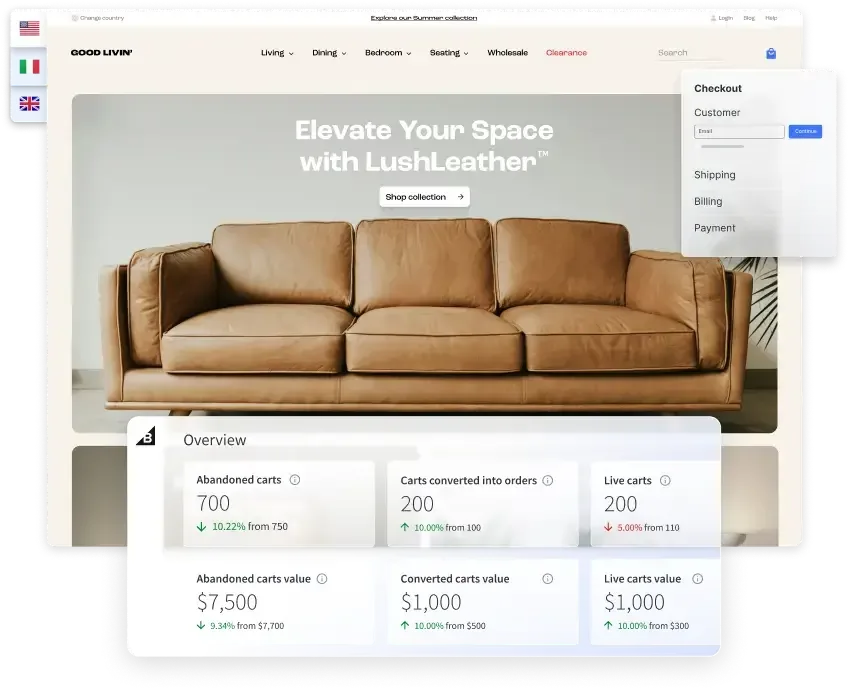
⏰ Isn't about time that you evaluated your ecommerce platform?
Request a demo to see how the BigCommerce platform is different.