






Written by
Mandy Spivey16/07/2026
Ecommerce Branding
Get The Print Version
Tired of scrolling? Download a PDF version for easier offline reading and sharing with coworkers.
A link to download the PDF will arrive in your inbox shortly.
Key highlights:
Ecommerce branding is how you shape customer perception of your online business across every touchpoint, including visuals, voice, values, and experience.
Strong branding builds trust, lowers customer acquisition costs, drives customer loyalty, and lets you charge premium prices.
The core elements of an ecommerce brand: purpose and values, visual identity, brand voice, brand story, and packaging.
Build your brand in six steps: conduct thorough market research, define your positioning, document a brand style guide, tell your story, invest in visuals, and stay consistent.
Your branded storefront, SEO, content, social media posts, and email are the channels that carry your brand to customers.
You may not have consciously considered it before.
But if you’ve ever shopped online, a business with good ecommerce branding can make all the difference between trusting a brand enough to hit “Buy” or bouncing to another site for your purchase.
In the simplest terms, ecommerce branding is what separates a memorable online store from a forgettable one. It's the deliberate process of shaping how customers perceive your business through your visual identity, brand voice, values, and every interaction across your storefront, social channels, and packaging.
In a market where shoppers can compare dozens of nearly identical products in seconds, your ecommerce brand is often the only durable differentiator you have.
The payoff is measurable: 68% of shoppers will pay more for products from brands they trust.
This guide covers the full ecommerce branding lifecycle — not just logo design, but the strategy, elements, channels, and examples that turn first-time buyers into loyal customers.
What is ecommerce branding?
Ecommerce branding is the practise of building a distinct, consistent identity for an online business so customers recognise it, trust it, and choose it over competitors.
Ecommerce branding encompasses everything a shopper sees, reads, and experiences: your name, logo, colours, brand messaging, product pages, packaging, and customer service.
Digging deeper, ecommerce branding covers:
Visual identity: logo, colour palette, typography, photography style, and site design.
Brand voice: the personality and tone of voice in your product descriptions, emails, and social posts.
Customer experience: how shopping, shipping, unboxing, and support feel from end to end.
Values and reputation: what your business stands for and how reliably it keeps its promises.
Within ecommerce branding, there are a few terms worth exploring a bit further. Your brand is the perception customers hold of your business, which you can never fully control. Branding is the active work you do to shape that perception. Brand identity is the tangible toolkit — visuals, voice, and messaging — you use to do the shaping.
A strong brand strategy connects all three elements, so what customers perceive matches what you intend.
Why ecommerce branding matters
Branding, while seemingly cosmetic, is actually an economic exercise. The benefits show up in acquisition costs, retention rates, pricing power, and long-term brand awareness.
At a glance, strong ecommerce branding:
Builds trust with shoppers who can't touch your products before buying.
Lowers customer acquisition costs by making marketing more efficient.
Drives customer loyalty and repeat purchases.
Supports premium pricing and protects margins.
While all of the above benefits are possible through branding, it’s important to note that branding needs to be done well for any of them to manifest.
Builds trust and credibility.
Trust is the deciding factor in most online purchases. Shoppers can't inspect your products in person, so they rely on brand signals. A professional storefront, consistent messaging, transparent policies, and social proof all help customers judge whether you'll deliver what’s promised.
The research is emphatic: 67% of shoppers say product quality and value define brand trust, 63% point to brand reputation, and 54% highlight customer experience.
Trust also has to be earned continuously. Upwards of 55% of consumers said they'd switch from a go-to brand for a better price, yet nearly nine in ten will pay more when trust is strong. Branding is what tips that balance in your favour.
Lowers customer acquisition costs.
Strong brands spend less to win each customer, with ecommerce branding playing a large part in lessening objections and building trust with new shoppers.
A recognisable ecommerce brand offsets the pressure associated with acquisition. Shoppers who already know and trust you convert without repeated ad exposure, while branded search traffic costs far less than cold prospecting.
Branding also fuels the cheapest acquisition channel of all — word of mouth. Customers who identify with your brand recommend it, effectively bringing your acquisition cost for those referrals to zero. Pair that with a documented ecommerce marketing strategy and your paid spend works harder, too.
Drives loyalty and repeat purchases.
Retention economics heavily favor branded businesses, helping to build loyalty with consistent messaging across all channels.
Another added benefit is that repeat buyers are also more valuable per order.The return on investment grows greater as shoppers purchase more frequently, with ecommerce branding playing a huge part in making that happen.
Commands premium pricing.
Branding gives you pricing power: more than two-thirds of consumers in the U.S., U.K., and Australia are willing to pay an average of 25% more for their favourite brands, citing positive experiences, consistent quality, and familiarity.
Values matter here, too.In fact, 64% of Americans would pay more for brands that reflect their values — a figure that jumps to 79% among Gen Z. When your brand stands for something specific, price becomes a secondary consideration.
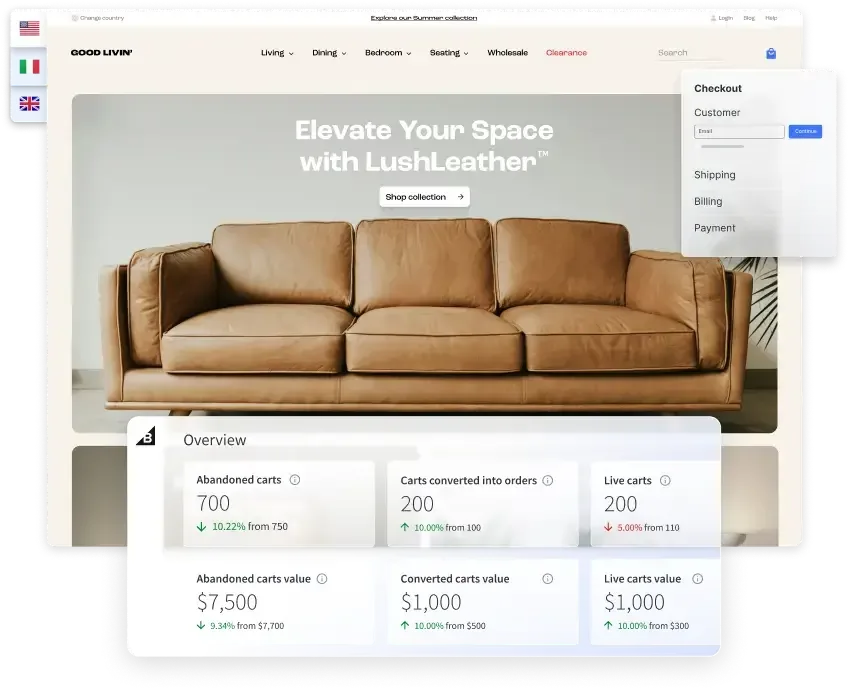
⏰ Isn't about time that you evaluated your ecommerce platform?
Request a demo to see how the BigCommerce platform is different.
Key elements of an ecommerce brand
Every strong ecommerce brand is built from the same core components. Define each one deliberately, document it, and apply it everywhere your brand appears — storefront, social commerce, packaging, and email.
Now, what do these elements look like?
Brand purpose, mission, and values.
Brand purpose is the reason your business exists, beyond making money.
Your mission statement describes what you do and for whom; your values define how you behave along the way. Together they anchor every other branding decision.
A skincare brand built on ingredient transparency, for example, should let that value shape its product pages, sourcing disclosures, and social content, not just its About page.
Visual identity (logo, colour, typography).
Visual identity is the set of visual assets — logo, colour palette, typography, and imagery style — that makes your brand instantly recognisable. It's usually a shopper's first impression of your store, and it should be codified in a brand style guide so it stays consistent from your homepage to your Instagram grid.
Great ecommerce website design treats these assets as a system: the same brand colours, type, fonts, and photo treatment across every page and channel.
Brand voice and messaging.
Brand voice is the consistent personality in your written and spoken communication. It determines whether your product descriptions read as playful, authoritative, warm, or irreverent.
Consistency is key. Brand voice should sound the same in a checkout confirmation as it does in a TikTok caption. Brand messaging is what you say; voice is how you say it. Define both, with examples, so every writer and channel manager can stay on-brand.
Brand story.
Your brand story is the narrative that explains why your business exists and why customers should care.
Origin stories, founder motivations, and the problem you set out to solve all give shoppers an emotional reason to choose you over a functionally identical competitor. The best ecommerce brand stories show up everywhere: product pages, packaging inserts, email welcome series, and social content.
Packaging and unboxing experience.
Packaging is the one physical touchpoint every ecommerce customer experiences.
Branded boxes, inserts, and thoughtful presentation extend your identity into the customer's home, and generate the kind of unboxing content shoppers love to share. This is especially powerful for private label products, where packaging often carries the entire brand impression.
How to build an ecommerce brand
Building an ecommerce brand is a sequential process and takes time.
Follow these six steps, then repeat and refine as your business grows:
1. Research your target market.
Start by understanding exactly who you're branding for. Analyse customer demographics, preferences, behaviours, and purchase drivers through surveys, reviews, competitor analysis, and analytics. A brand that tries to appeal to everyone resonates with no one — focus on the segments most likely to buy, and learn the language they use to describe their problems.
2. Define your unique value proposition and positioning.
Articulate what you offer, who it's for, and why it's different in one or two sentences.
Positioning is the space you occupy in the customer's mind relative to competitors: fastest, most sustainable, most premium, most fun. Every branding decision downstream, from visuals to voice to channels, should reinforce this position.
3. Develop a brand style guide.
Document your brand so anyone can apply it consistently.
A brand style guide should cover your logo usage, brand colour palette, typography, imagery standards, brand voice with do/don't examples, and messaging pillars. This document is what keeps your brand identity intact as your team, agency roster, and channel mix grow.
4. Tell your brand story.
Craft a narrative that connects your values to your customer's life.
Explain why the business exists, what problem sparked it, and what you stand for, then distribute that story across your About page, product descriptions, social channels, and packaging.
Storytelling turns a transactional purchase into an emotional connection, which is the foundation of customer loyalty.
5. Create high-quality visuals.
Invest in professional product photography, lifestyle imagery, and video that match your style guide. High-quality visual elements improve brand recall and signal product quality before a shopper reads a single word. Show products from multiple angles, in context, and in motion.
Remember: product demos and behind-the-scenes videos convey personality that static images can't.
6. Maintain consistency across channels — and deliver on the promise.
Apply the same identity, voice, and experience everywhere: storefront, marketplaces, social, email, ads, and support.
Consistency is what compounds brand awareness into trust. A unified customer experience across touchpoints is the operational backbone of it. And remember that branding is a promise: consistent product quality, reliable shipping, and responsive service are what make the promise credible.
A beautiful brand that under-delivers erodes trust faster than no brand at all.
Channels for building your ecommerce brand
Your brand strategy only works if it reaches customers. These five channels do the heavy lifting — each reinforces your ecommerce brand in a different way.
Your branded storefront.
Your own storefront is the foundation of your brand, and the one channel you fully control. Unlike online marketplaces, where your products sit in someone else's template, your DTC site lets you express your full visual identity, voice, and story without compromise. It's also where you own the customer relationship and the data that comes with it.
Treat every element — navigation, product pages, checkout, post-purchase emails — as a brand touchpoint, and let it anchor your presence across all other sales channels.
SEO.
Search visibility builds brand credibility, not just traffic. Sites that rank highly in search results are perceived as more trustworthy and authoritative; shoppers assume Google has already vetted them.
Ecommerce SEO also captures buyers at the moment of intent, and consistent rankings across your category keep your brand name in front of shoppers throughout their research process. Over time, that repeated exposure compounds into brand awareness and branded search, the clearest signal that your branding is working.
Content marketing.
Content positions your brand as the authority in your niche. A brand selling outdoor gear that publishes genuinely useful guides on trip planning or gear selection becomes the trusted resource customers return to — long before and after any purchase.
The key branding move: make your content unmistakably yours.
Apply your brand voice, cite your values, and cover topics competitors won't, so the expertise accrues to your brand rather than to a generic blog.
Social media.
Social media is where your brand personality lives in public. It's the channel best suited to showing the human side of your ecommerce brand: behind-the-scenes content, customer stories, user-generated content, and real-time conversation.
Consistent visual treatment and voice matter more here than anywhere. A shopper should recognise your post before seeing your handle. Social advertising then extends that identity to precisely targeted new audiences.
Email marketing.
Email marketing is your brand's most personal, owned channel, and a powerful retention engine. Every message lands in a space you don't share with competitors, making it ideal for deepening customer loyalty.
To make email work for your brand:
Use visually on-brand templates
Personalise based on purchase history and preferences
Offer subscribers genuine exclusives
Share educational content and user-generated social proof
Lastly, a welcome series that tells your brand story is one of the highest-leverage branding assets you can build.
As a quick reference, each channel plays a primary branding role: your storefront anchors identity, SEO and content build trust and authority, social drives awareness and personality, and email drives retention and loyalty.

There's a lot to love ❤️
Watch a demo to see the BigCommerce platform in action.
Ecommerce branding examples to learn from
The fastest way to sharpen your own brand strategy is to study brands that execute one lever exceptionally well. Each of the following BigCommerce merchants illustrates a different branding strength. (For more design inspiration, browse these standout ecommerce stores.)
LAKRIDS BY BÜLOW
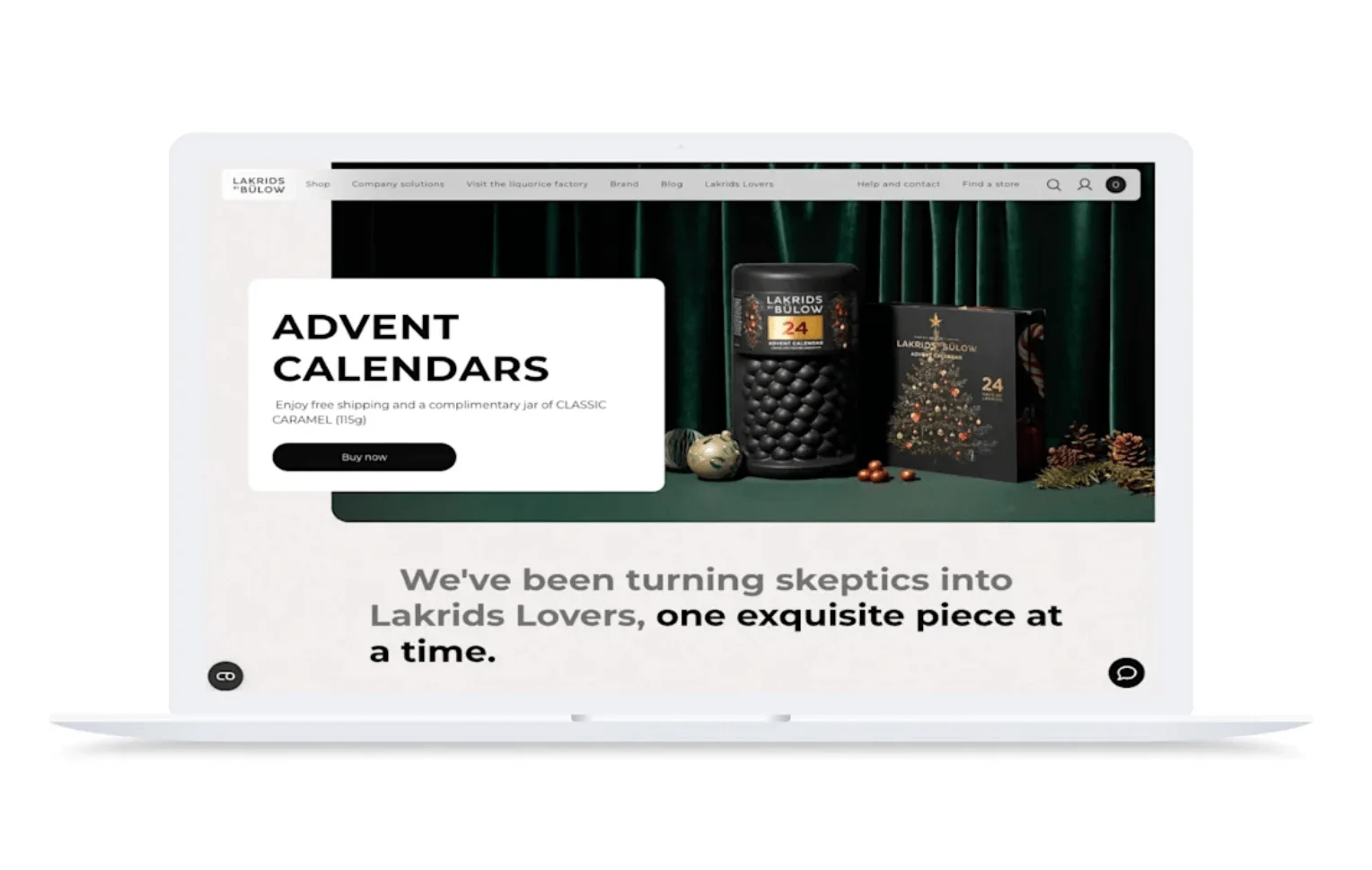
For LAKRIDS BY BÜLOW, ecommerce branding is inseparable from customer experience. Rather than treating the online store as a transactional afterthought, the Danish gourmet liquorice maker uses its site to extend the same craftsmanship and warmth associated with its physical stores into the digital space.
Freed from platform complexity, the brand's team shifted its focus toward building richer landing pages and seasonal campaigns that reinforce a sense of exclusivity and reward for its most engaged customers. This ability to quickly design and launch on-brand moments, without waiting on developer resources, has let the company keep its storytelling consistent across markets while scaling toward new territories and a more polished B2B presence.
Oroton

Oroton's ecommerce branding strategy centres on translating a nearly century-old luxury heritage into a modern, consistent digital experience.
The Australian leather goods label treats its site not as a separate channel but as a direct extension of its in-store presence, using tailored landing pages, curated promotional messaging, and personalised tools like a holiday gift finder to preserve the elevated, considered feel customers expect from a “lifetime purchase” brand.
Localisation plays a key branding role too. Customers in different regions see region-appropriate assortments, reinforcing relevance without diluting the brand's premium positioning. Looking ahead, Oroton is pushing toward true omnichannel continuity, where a customer's online history informs how they're recognised and treated in-store, further unifying the brand experience across every touchpoint.
TheBattery.com
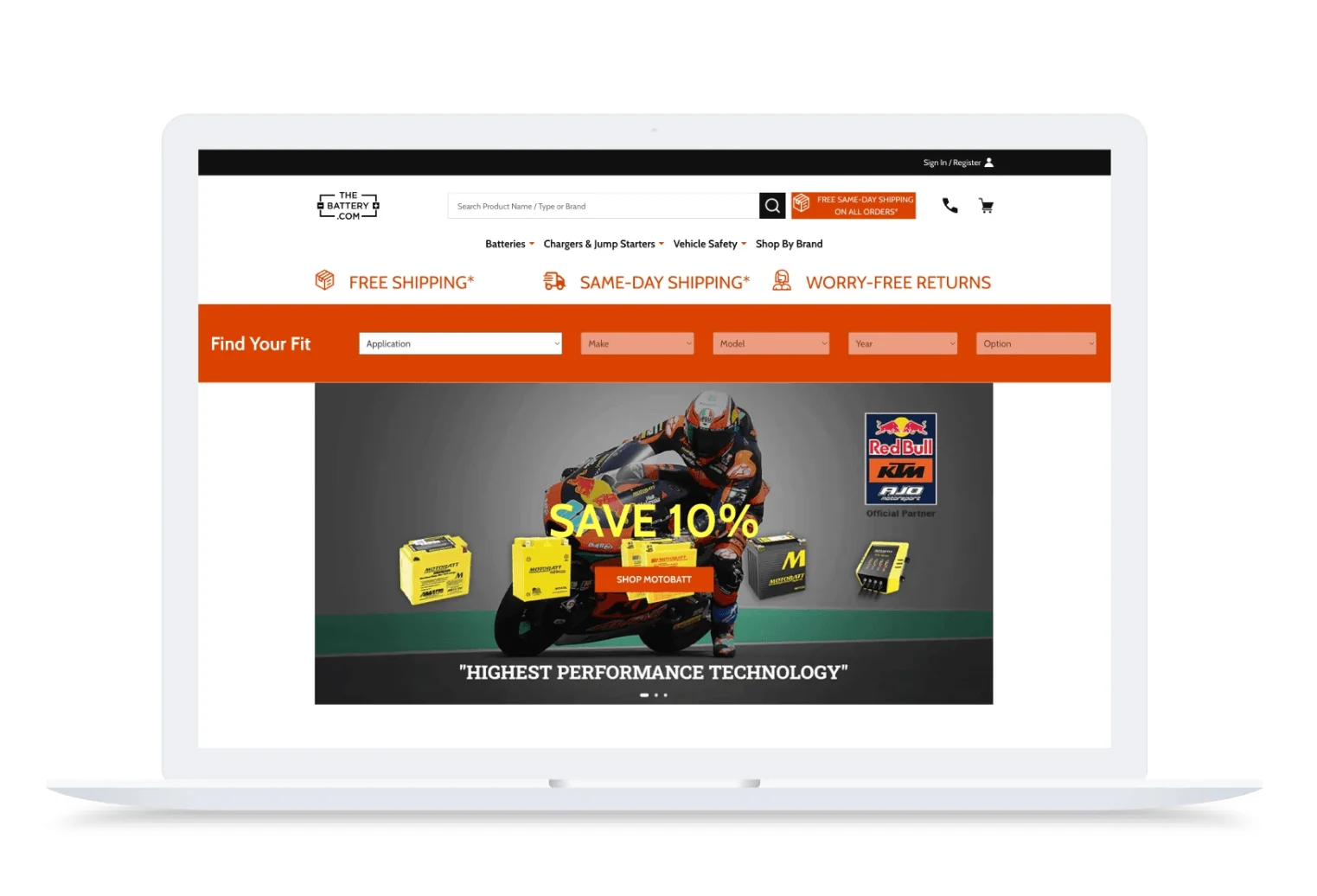
TheBattery.com's story shows how ecommerce branding can be built almost from scratch for a traditionally analog, wholesale-first business.
Northeast Battery & Alternator had deep industry credibility but no consumer-facing identity online. Shoppers looking for batteries simply didn't know the brand existed. Working with agency partner HATCH quantified, the company built a direct-to-consumer identity designed around ease and specificity, most notably a make/model/year search tool that reframes a commodity purchase (a battery) as a guided, brand-owned shopping experience rather than a generic parts lookup.
By extending that identity consistently across its own site and third-party marketplaces like Amazon, eBay, and Walmart, TheBattery.com established a recognisable presence in a category where consumers previously had no brand loyalty at all, turning an invisible wholesaler into a real consumer destination.
The final word
Ecommerce branding is the compounding asset behind every durable online business. It builds the trust that wins first purchases, the loyalty that drives repeat revenue, and the differentiation that protects your margins as acquisition costs climb.
You can start strengthening your ecommerce brand today with three steps. First, audit brand consistency across every channel, including your storefront, marketplaces, social, and email, and flag anywhere your visuals or voice drift. Second, document (or update) your brand style guide so consistency stops depending on memory. Third, pick your highest-traffic channel and bring it fully on-brand, from imagery to tone.
And if your current platform limits how much of your brand you can express, that's a solvable problem. BigCommerce gives you full design control over a fast, flexible storefront — so your ecommerce brand shows up exactly the way you built it, on every device and channel.
FAQs about ecommerce branding
Ecommerce branding is the process of creating a distinct, consistent identity for an online business across every customer touchpoint.
Ecommerce branding includes your visual identity, brand voice, values, story, and customer experience. Strong ecommerce branding helps shoppers recognise your business, trust it, and choose it repeatedly over competitors.
Measure branding through brand recall surveys, retention rates, direct and branded search traffic, and ROI.
Brand awareness is more qualitative than most metrics, but several methods make it trackable:
Surveys and questionnaires: Test aided and unaided recall (prompting with your company name) and brand recognition (showing your logo or product). Tracking social engagement and branded search volume works, too.
Customer loyalty: Retention and repeat-purchase rates are an indirect but reliable read on brand strength.
Website traffic: Rising direct traffic and branded search clicks indicate growing brand awareness.
Return on investment: Compare branding costs against the revenue growth that follows. Effective branding ultimately shows up in sales.
The most common mistakes are aiming for too broad of a target audience, copying competitors, and inconsistent messaging across channels.
Misunderstanding your customer base leads to branding that resonates with no one, while imitation forfeits the differentiation branding exists to create. Inconsistency — different voices, visuals, or promises on different channels — confuses customers and dilutes brand identity. Finally, treating branding as a one-time project rather than a long-term strategy: measure results continuously and refine your ecommerce brand strategy as your market evolves.
Establishing the foundations of an ecommerce brand (positioning, visual identity, voice, and a style guide) typically takes one to three months.
Building genuine brand awareness and customer loyalty takes longer: most brands need 6 –12 months of consistent execution to see meaningful lifts in branded search, retention, and recall. Branding compounds, so the consistent brands pull further ahead every year.
Get a free 15-day trial of BigCommerce.
No credit cards. No commitment. Explore at your own pace.